Safe & secure Roko Network wallet
Take control of your Roko Network assets with complete confidence in the Trezor ecosystem.
- Secured by your hardware wallet
- Use with compatible hot wallets
- Trusted by over 2 million customers
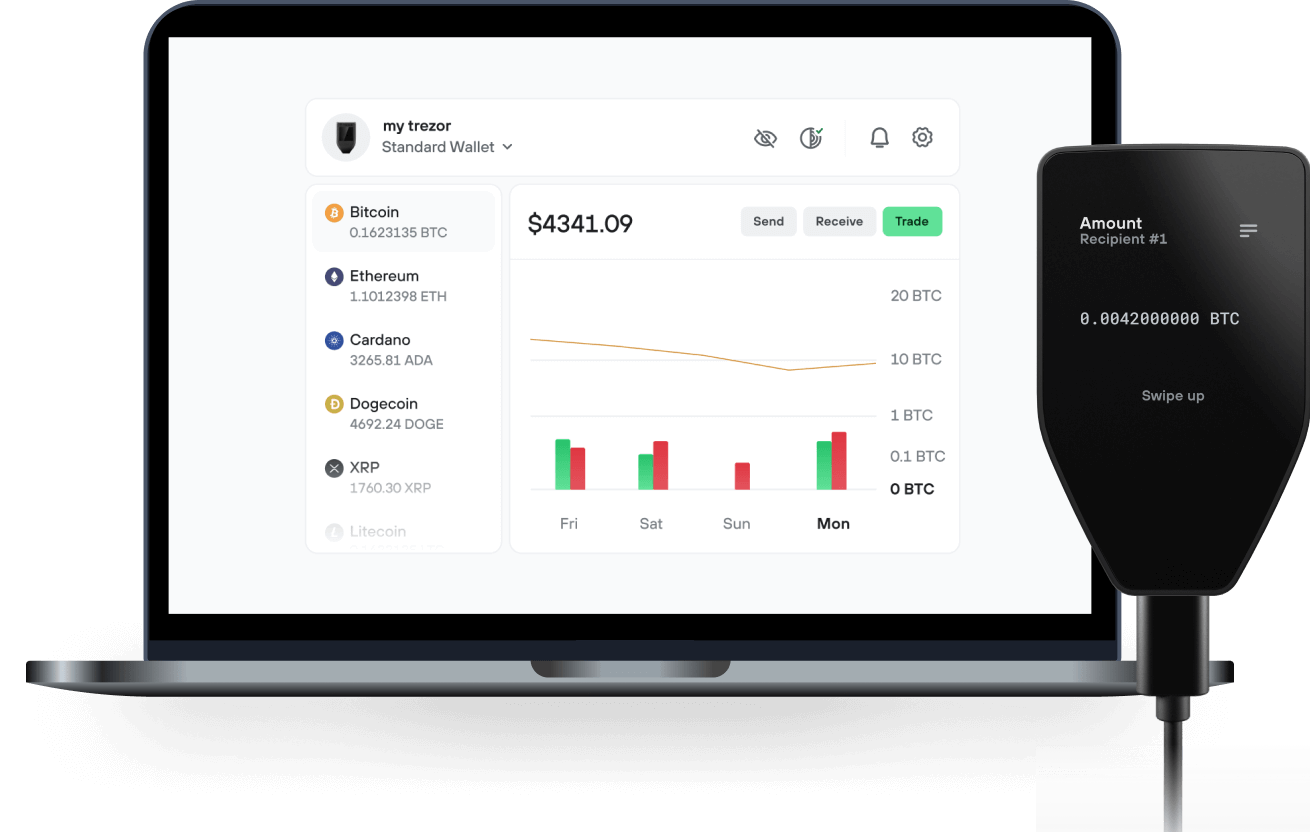
Send & receive your Roko Network with the Trezor Suite app

Send & receive
Trezor hardware wallets that support Roko Network
Sync your Trezor with wallet apps
Manage your Roko Network with your Trezor hardware wallet synced with several wallet apps.
Trezor Suite
MetaMask
Rabby
Supported Roko Network Network
Why a hardware wallet?

Go offline with Trezor
- You own 100% of your coins
- Your wallet is 100% safe offline
- Your data is 100% anonymous
- Your coins aren’t tied to any company
Online exchanges
- If an exchange fails, you lose your coins
- Exchanges are targets for hackers
- Your personal data may be exposed
- You don’t truly own your coins
How to ROKO on Trezor
Connect your Trezor
Open a third-party wallet app
Manage your assets
Make the most of your ROKO
Trezor keeps your ROKO secure
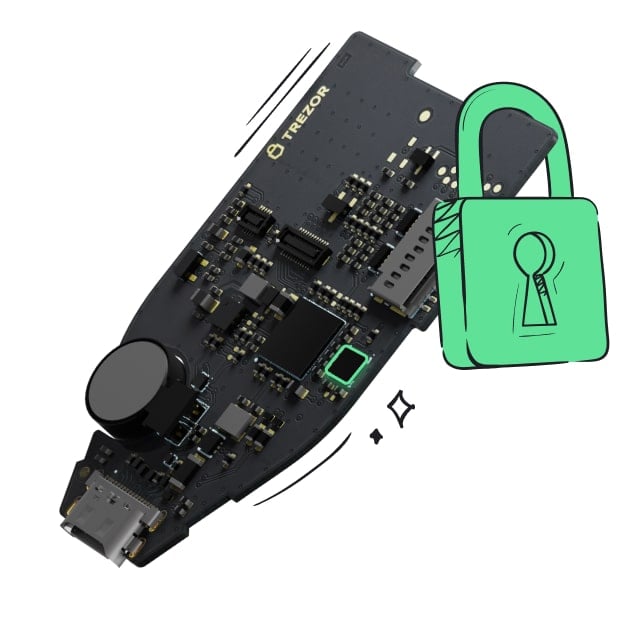 Protected by Secure Element
The best defense against both online and offline threats
 Your tokens, your control
Absolute control of every transaction with on-device confirmation
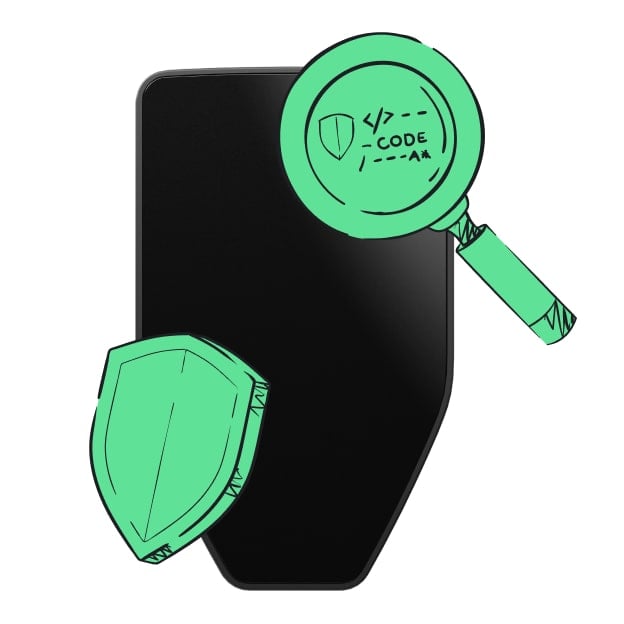 Security starts with open-source
Transparent wallet design makes your Trezor better and safer
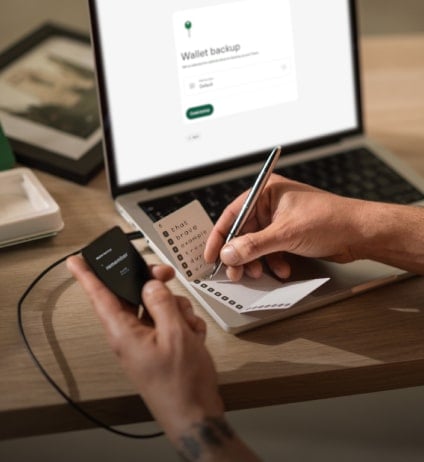 Clear & simple wallet backup
Recover access to your digital assets with a new backup standard
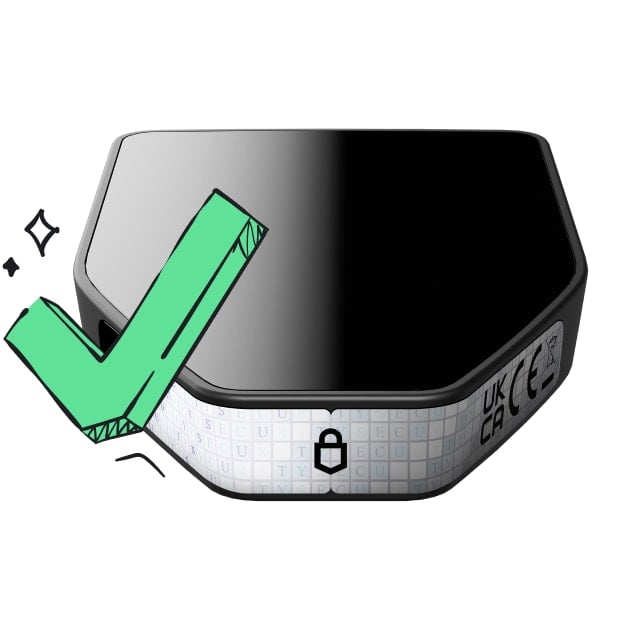 Confidence from day one
Packaging & device security seals protect your Trezor’s integrity
Roko Network is an EVM-compatible Layer-1 blockchain that makes time and transaction ordering part of its protocol. Smart contracts and external applications can use its temporal records to establish transaction sequences and enforce time-dependent conditions.
Built on Substrate and the Polkadot SDK, Roko combines blockchain consensus with Proof of Accurate Time (PoAT), which incorporates validator timekeeping quality into the consensus process. A peer-to-peer timing mesh exchanges clock observations and assesses synchronization, while underlying timing sources provide the physical reference.
Transactions receive canonical timestamps, and the network commits temporal metadata on-chain. Explicit ordering rules include fee-based priority, allowing sequencing to be checked against the protocol rather than left entirely to block-producer discretion. Timestamps have nanosecond resolution, but actual clock accuracy depends on timing sources and network conditions.
Developers access this information through RPC interfaces and a native EVM precompile. RPC exposes mesh estimates, synchronization quality, and historical records; Solidity contracts can read transaction timestamps and time committed in block metadata. Live clock observations remain distinct from recorded chain state, and applications requiring irreversible results must wait for finality.
Time-sensitive markets and sealed-bid auctions can use these primitives to enforce deadlines. Provenance applications can record the sequence of submissions, while autonomous agents and connected systems can anchor evidence of their activity to an on-chain timeline. Settlement logic can then reference when that evidence was submitted without treating the timestamp alone as proof that off-chain work was completed.
Roko currently operates a public testnet where developers can deploy contracts and operators can run nodes. Timing services, staking, and governance tools are available for testing and participation.