Sichere & geschützte Roko Network Wallet
Übernimm die Kontrolle über deine Roko Network Assets mit vollem Vertrauen in das Trezor Ökosystem.
- Gesichert durch deine Hardware-Wallet
- Nutze ihn mit kompatiblen Hot-Wallets
- Über 2 Millionen Kunden vertrauen uns
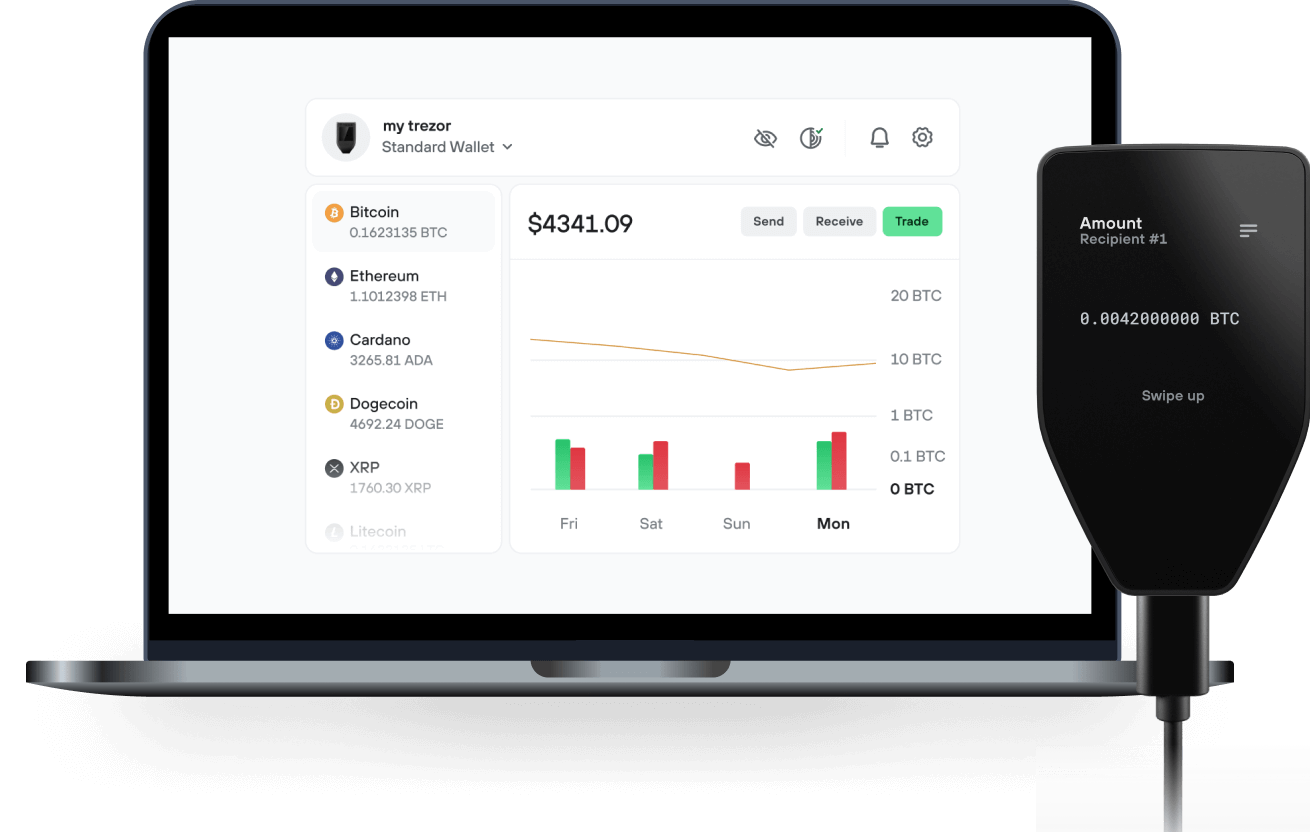
Sende & empfange deinen Roko Network mit der Trezor Suite App

Sende & empfange
Trezor Hardware-Wallet, die Roko Network unterstützen
Synchronisiere Trezor mit Wallet-Apps
Verwalte deine Roko Network mit deiner Trezor Hardware-Wallet, die mit mehreren Wallet-Apps synchronisiert ist.
Trezor Suite
MetaMask
Rabby
Unterstütztes Roko Network Netzwerk
Warum eine Hardware-Wallet?

Gehe offline mit Trezor
- Du besitzt 100 % deiner Coins
- Deine Wallet ist offline zu 100 % sicher
- Deine Daten sind zu 100 % anonym
- Deine Coins sind an keine Firma gebunden
Online-Börsen
- Wenn ein Umtausch fehlschlägt, verlierst du deine Coins
- Börsen sind Ziele von Hackern
- Deine persönlichen Daten könnten offengelegt werden
- Du besitzt deine Coins nicht wirklich
Wie man ROKO auf Trezor
Verbinde deinen Trezor
Öffne eine Drittanbieter-Wallet-App
Verwalte dein Vermögen
Mache das Beste aus deinen ROKO
Trezor hält dein ROKO sicher
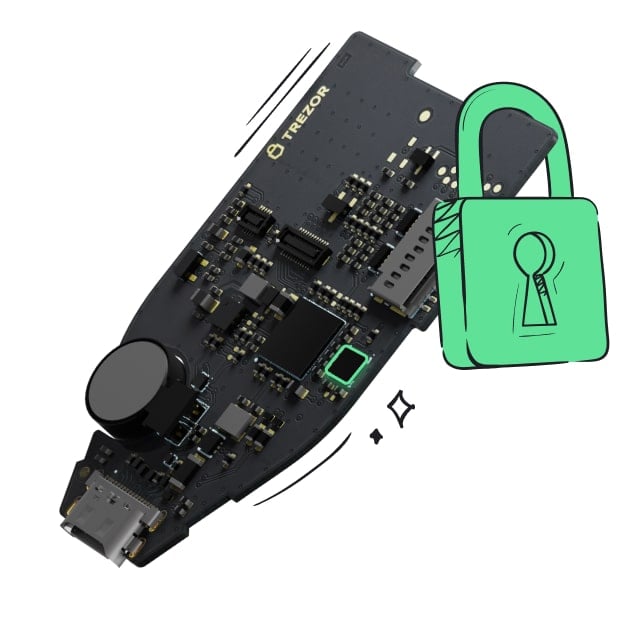 Geschützt durch Secure Element
Die beste Verteidigung gegen beides, online und offline Bedrohungen
 Deine Token, deine Kontrolle
Absolute Kontrolle über jede Transaktion mit Bestätigung auf dem Gerät
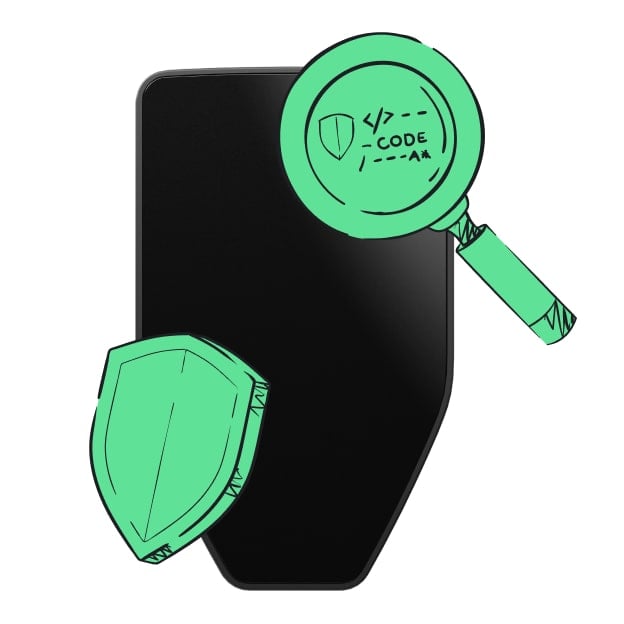 Sicherheit beginnt mit Open-Source
Das transparente Wallet-Design macht deinen Trezor besser und sicherer
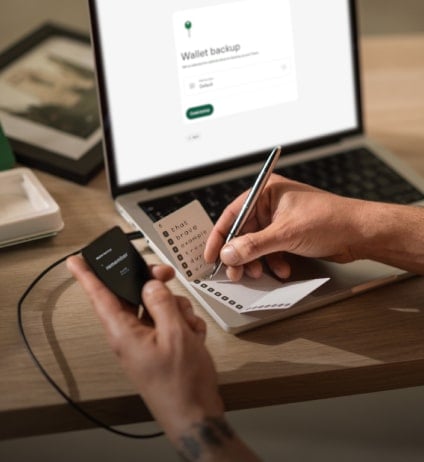 Übersichtliches & einfaches Wallet-Backup
Stelle deinen Zugriff auf deine digitalen Assets wieder her mit einem neuen Backup-Standard
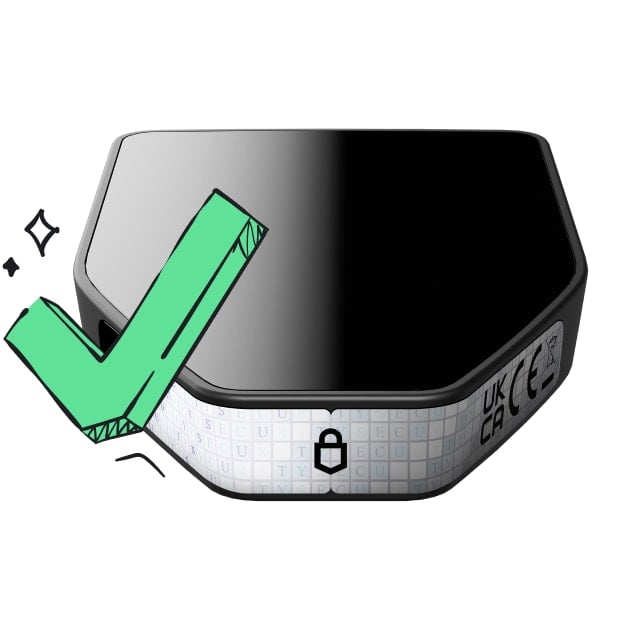 Vertrauen vom ersten Tag an
Verpackungs- & Gerätesicherheitssiegel schützen die Integrität deines Trezors
Roko Network is an EVM-compatible Layer-1 blockchain that makes time and transaction ordering part of its protocol. Smart contracts and external applications can use its temporal records to establish transaction sequences and enforce time-dependent conditions.
Built on Substrate and the Polkadot SDK, Roko combines blockchain consensus with Proof of Accurate Time (PoAT), which incorporates validator timekeeping quality into the consensus process. A peer-to-peer timing mesh exchanges clock observations and assesses synchronization, while underlying timing sources provide the physical reference.
Transactions receive canonical timestamps, and the network commits temporal metadata on-chain. Explicit ordering rules include fee-based priority, allowing sequencing to be checked against the protocol rather than left entirely to block-producer discretion. Timestamps have nanosecond resolution, but actual clock accuracy depends on timing sources and network conditions.
Developers access this information through RPC interfaces and a native EVM precompile. RPC exposes mesh estimates, synchronization quality, and historical records; Solidity contracts can read transaction timestamps and time committed in block metadata. Live clock observations remain distinct from recorded chain state, and applications requiring irreversible results must wait for finality.
Time-sensitive markets and sealed-bid auctions can use these primitives to enforce deadlines. Provenance applications can record the sequence of submissions, while autonomous agents and connected systems can anchor evidence of their activity to an on-chain timeline. Settlement logic can then reference when that evidence was submitted without treating the timestamp alone as proof that off-chain work was completed.
Roko currently operates a public testnet where developers can deploy contracts and operators can run nodes. Timing services, staking, and governance tools are available for testing and participation.