Dompet Roko Network yang aman & terlindungi
Kendalikan Roko Network aset Anda sepenuhnya dengan percaya diri di ekosistem Trezor.
- Diamankan oleh dompet perangkat keras Anda
- Gunakan dengan dompet panas yang kompatibel
- Dipercaya oleh lebih dari 2 juta pelanggan
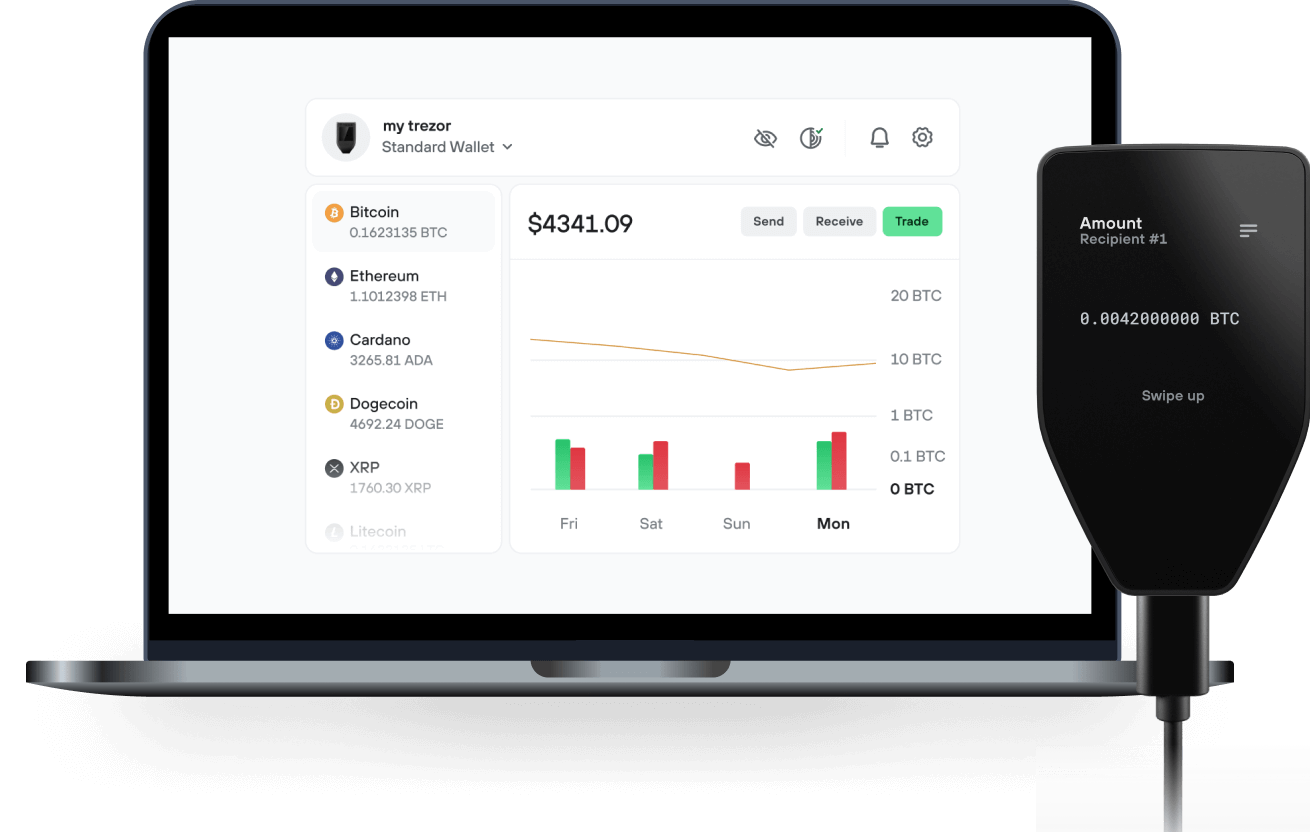
Kirim & terima Roko Network Anda dengan aplikasi Trezor Suite

Kirim & terima
Dompet perangkat keras Trezor yang mendukung Roko Network
Sinkronkan Trezor Anda dengan aplikasi dompet
Kelola Roko Network Anda dengan dompet perangkat keras Trezor yang terhubung dengan beberapa aplikasi dompet.
Trezor Suite
MetaMask
Rabby
Jaringan Roko Network yang didukung
Mengapa dompet perangkat keras?

Offline bersama Trezor
- Anda memiliki 100% koin Anda
- Dompet Anda 100% aman secara offline
- Data Anda 100% anonim
- Koin Anda tidak terikat pada perusahaan mana pun
Bursa online
- Jika sebuah bursa gagal, Anda akan kehilangan koin Anda
- Bursa menjadi target para peretas
- Data pribadi Anda mungkin terekspos
- Anda tidak benar-benar memiliki koin Anda
Cara menggunakan ROKO di Trezor
Hubungkan Trezor Anda
Buka aplikasi dompet pihak ketiga
Kelola aset Anda
Maksimalkan ROKO Anda
Trezor menjaga ROKO Anda tetap aman
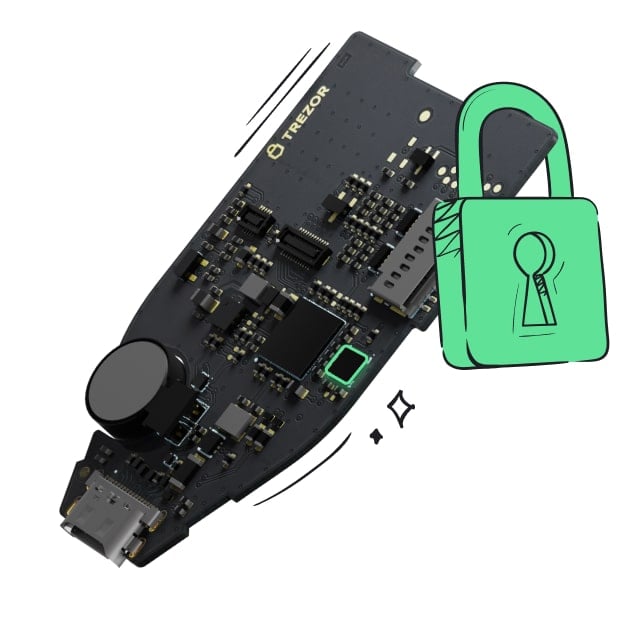 Dilindungi oleh Secure Element
Perlindungan terbaik terhadap ancaman online dan offline
 Token Anda, kendali Anda
Kontrol penuh atas setiap transaksi dengan konfirmasi langsung di perangkat
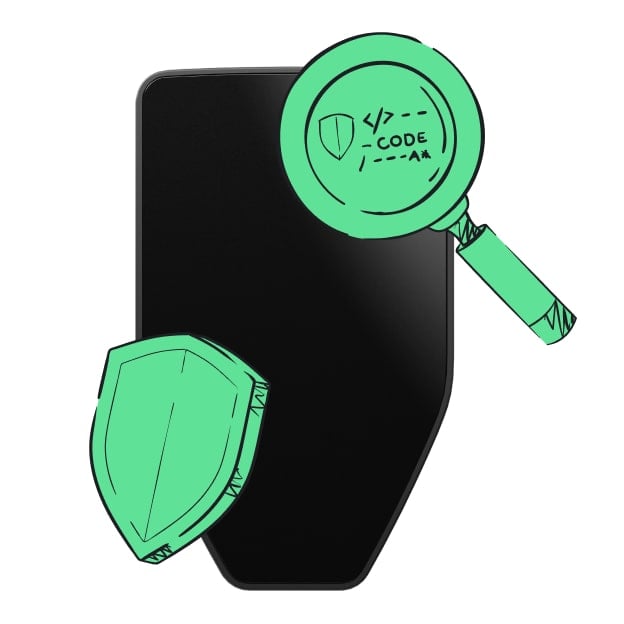 Keamanan dimulai dengan open-source
Desain dompet transparan membuat Trezor Anda lebih baik dan lebih aman
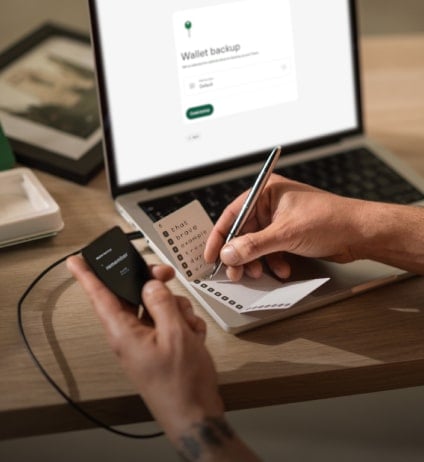 Cadangan dompet yang jelas & sederhana
Pulihkan akses ke aset digital Anda dengan standar cadangan baru
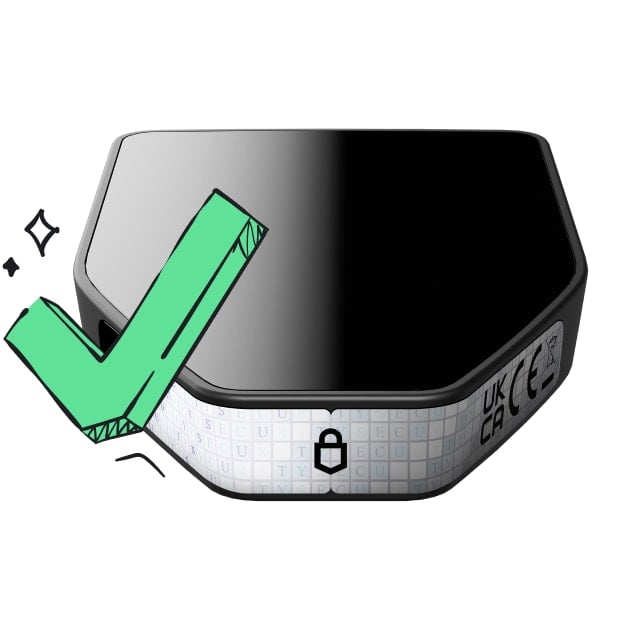 Percaya diri sejak hari pertama
Segel pengaman kemasan & perangkat melindungi integritas Trezor Anda
Roko Network is an EVM-compatible Layer-1 blockchain that makes time and transaction ordering part of its protocol. Smart contracts and external applications can use its temporal records to establish transaction sequences and enforce time-dependent conditions.
Built on Substrate and the Polkadot SDK, Roko combines blockchain consensus with Proof of Accurate Time (PoAT), which incorporates validator timekeeping quality into the consensus process. A peer-to-peer timing mesh exchanges clock observations and assesses synchronization, while underlying timing sources provide the physical reference.
Transactions receive canonical timestamps, and the network commits temporal metadata on-chain. Explicit ordering rules include fee-based priority, allowing sequencing to be checked against the protocol rather than left entirely to block-producer discretion. Timestamps have nanosecond resolution, but actual clock accuracy depends on timing sources and network conditions.
Developers access this information through RPC interfaces and a native EVM precompile. RPC exposes mesh estimates, synchronization quality, and historical records; Solidity contracts can read transaction timestamps and time committed in block metadata. Live clock observations remain distinct from recorded chain state, and applications requiring irreversible results must wait for finality.
Time-sensitive markets and sealed-bid auctions can use these primitives to enforce deadlines. Provenance applications can record the sequence of submissions, while autonomous agents and connected systems can anchor evidence of their activity to an on-chain timeline. Settlement logic can then reference when that evidence was submitted without treating the timestamp alone as proof that off-chain work was completed.
Roko currently operates a public testnet where developers can deploy contracts and operators can run nodes. Timing services, staking, and governance tools are available for testing and participation.