Safe & secure NodeAI wallet
Take control of your NodeAI assets with complete confidence in the Trezor ecosystem.
- Secured by your hardware wallet
- Use with compatible hot wallets
- Trusted by over 2 million customers
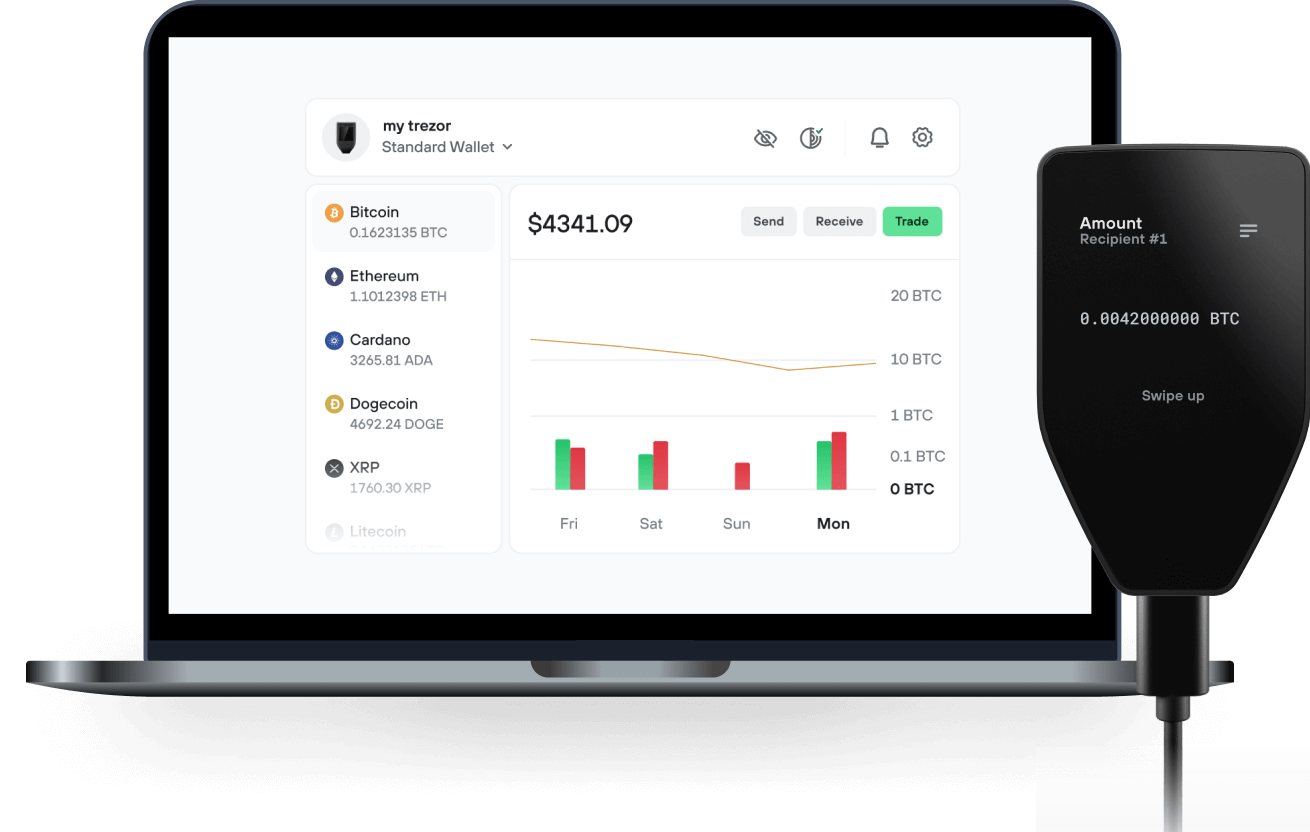
Send & receive your NodeAI with the Trezor Suite app

Send & receive
Trezor hardware wallets that support NodeAI
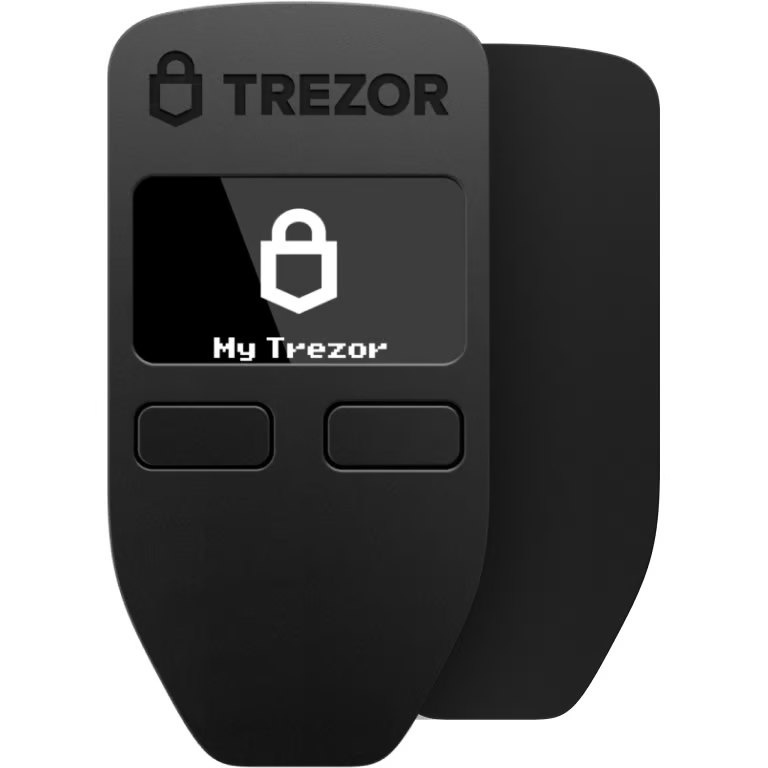
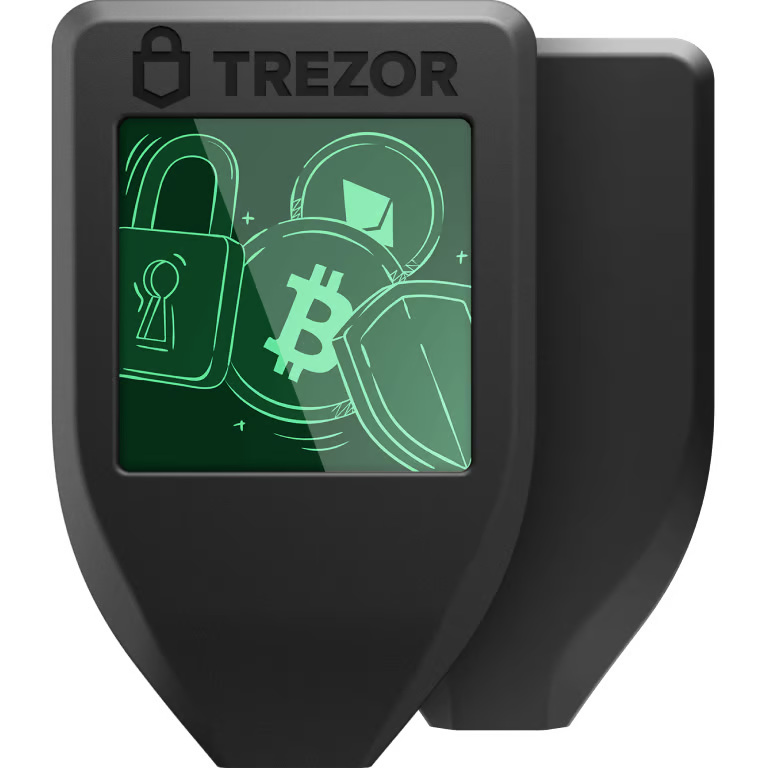
Sync your Trezor with wallet apps
Manage your NodeAI with your Trezor hardware wallet synced with several wallet apps.
Trezor Suite
MetaMask
Rabby
Supported NodeAI Network
- BNB Smart Chain
Why a hardware wallet?
Go offline with Trezor
- You own 100% of your coins
- Your wallet is 100% safe offline
- Your data is 100% anonymous
- Your coins aren’t tied to any company
Online exchanges
- If an exchange fails, you lose your coins
- Exchanges are targets for hackers
- Your personal data may be exposed
- You don’t truly own your coins
How to NAIT on Trezor
Connect your Trezor
Open a third-party wallet app
Manage your assets
Make the most of your NAIT
Trezor keeps your NAIT secure
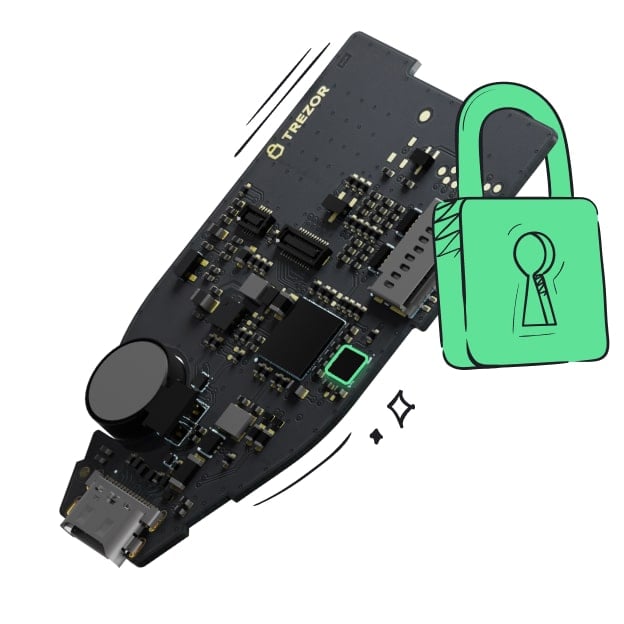 Protected by Secure Element
The best defense against both online and offline threats
 Your tokens, your control
Absolute control of every transaction with on-device confirmation
 Security starts with open-source
Transparent wallet design makes your Trezor better and safer
 Clear & simple wallet backup
Recover access to your digital assets with a new backup standard
 Confidence from day one
Packaging & device security seals protect your Trezor’s integrity
The production of machine intelligence has come to rely almost entirely on a system of benchmarking, where machine learning models are trained to perform well on narrowly defined supervised problems. While this system works well for pushing the performance on these specific problems, the mechanism is weak in situations where the introduction of markets would enable it to excel. For example, intelligence is increasingly becoming untethered from specific objectives and becoming a commodity that is expensively mined from data, monetarily valuable, transferable, and generally useful. Measuring its production with supervised objectives does not directly reward the commodity itself and causes the field to converge toward narrow specialists. Moreover, these objectives (often measured in uni-dimensional metrics like accuracy) do not have the resolution to reward niche or legacy systems, thus what is not currently state of the art is lost. Ultimately, the proliferation of diverse intelligence systems is limited by the need to train large monolithic models to succeed in a winner-take-all competition. Standalone engineers cannot directly monetize their work and what results is centralization where a small set of large corporations control access to the best artificial intelligence.
A new commodity needs a new type of market. This paper suggests a framework in which machine intelligence is measured by other intelligence systems. Models are ranked for informational production regardless of the subjective task or dataset used to train them. By changing the basis against which machine intelligence is measured, the market can reward intelligence that is applicable to a much larger set of objectives, legacy systems can be monetized for their unique value, and smaller diverse systems can find niches within a much higher resolution reward landscape. The solution is a network of computers that share representations continuously and asynchronously, peer-to-peer (P2P) across the internet. The constructed market uses a digital ledger to record ranks and to provide incentives to peers in a decentralized manner. The chain measures trust, making it difficult for peers to attain rewards without providing value to the majority. Researchers can directly monetize machine intelligence work and consumers can directly purchase it.