Safe & secure Dill wallet
Take control of your Dill assets with complete confidence in the Trezor ecosystem.
- Secured by your hardware wallet
- Use with compatible hot wallets
- Trusted by over 2 million customers
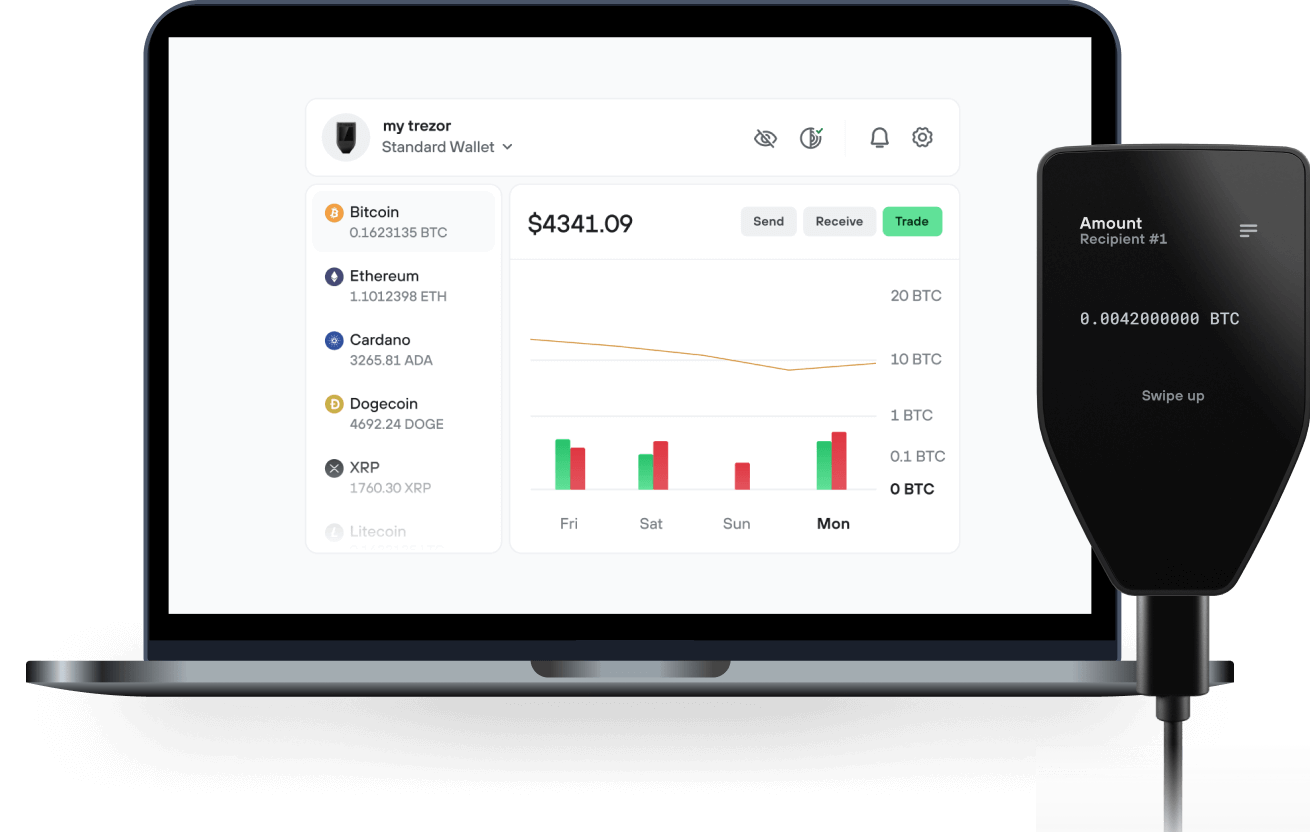
Send & receive your Dill with the Trezor Suite app

Send & receive
Trezor hardware wallets that support Dill
Sync your Trezor with wallet apps
Manage your Dill with your Trezor hardware wallet synced with several wallet apps.
Trezor Suite
MetaMask
Rabby
Supported Dill Network
Why a hardware wallet?

Go offline with Trezor
- You own 100% of your coins
- Your wallet is 100% safe offline
- Your data is 100% anonymous
- Your coins aren’t tied to any company
Online exchanges
- If an exchange fails, you lose your coins
- Exchanges are targets for hackers
- Your personal data may be exposed
- You don’t truly own your coins
How to DL on Trezor
Connect your Trezor
Open a third-party wallet app
Manage your assets
Make the most of your DL
Trezor keeps your DL secure
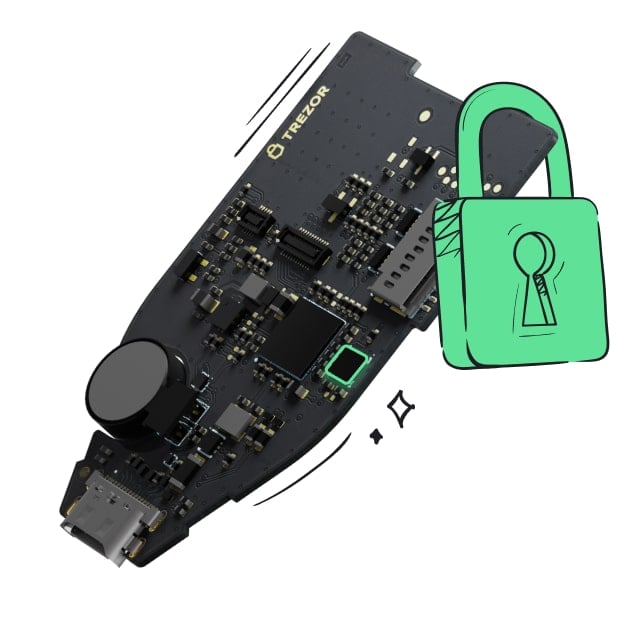 Protected by Secure Element
The best defense against both online and offline threats
 Your tokens, your control
Absolute control of every transaction with on-device confirmation
 Security starts with open-source
Transparent wallet design makes your Trezor better and safer
 Clear & simple wallet backup
Recover access to your digital assets with a new backup standard
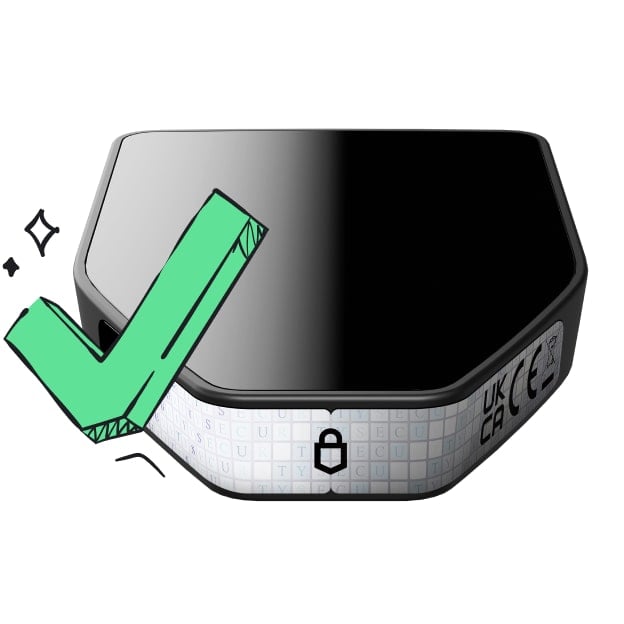 Confidence from day one
Packaging & device security seals protect your Trezor’s integrity
Dill, a new paradigm chain based on a modular and sharded architecture, capable of achieving maximum scalability, sovereignty, and decentralization:
- Maximum scalability: Dill supports up to 800,000 TPS, which is approximately 100 times the scalability of existing high-performance monolithic chains.
- Maximum sovereignty: Each application deployed on Dill has its own dedicated execution environment, allowing it to capture the value of the execution layer while enabling custom execution environments.
- Maximum decentralization: Dill supports up to 1 million validators while maintaining low barriers for staking and node operation, making it accessible to solo stakers.\
The protocol combines the advantages of both solutions by adopting a modular internal structure while maintaining an externally unified architecture. This approach ensures the high scalability, sovereignty and decentralization that modularity brings while avoiding the ecosystem fragmentation caused by Layer 2.