Safe & secure Umia wallet
Take control of your Umia assets with complete confidence in the Trezor ecosystem.
- Secured by your hardware wallet
- Use with compatible hot wallets
- Trusted by over 2 million customers
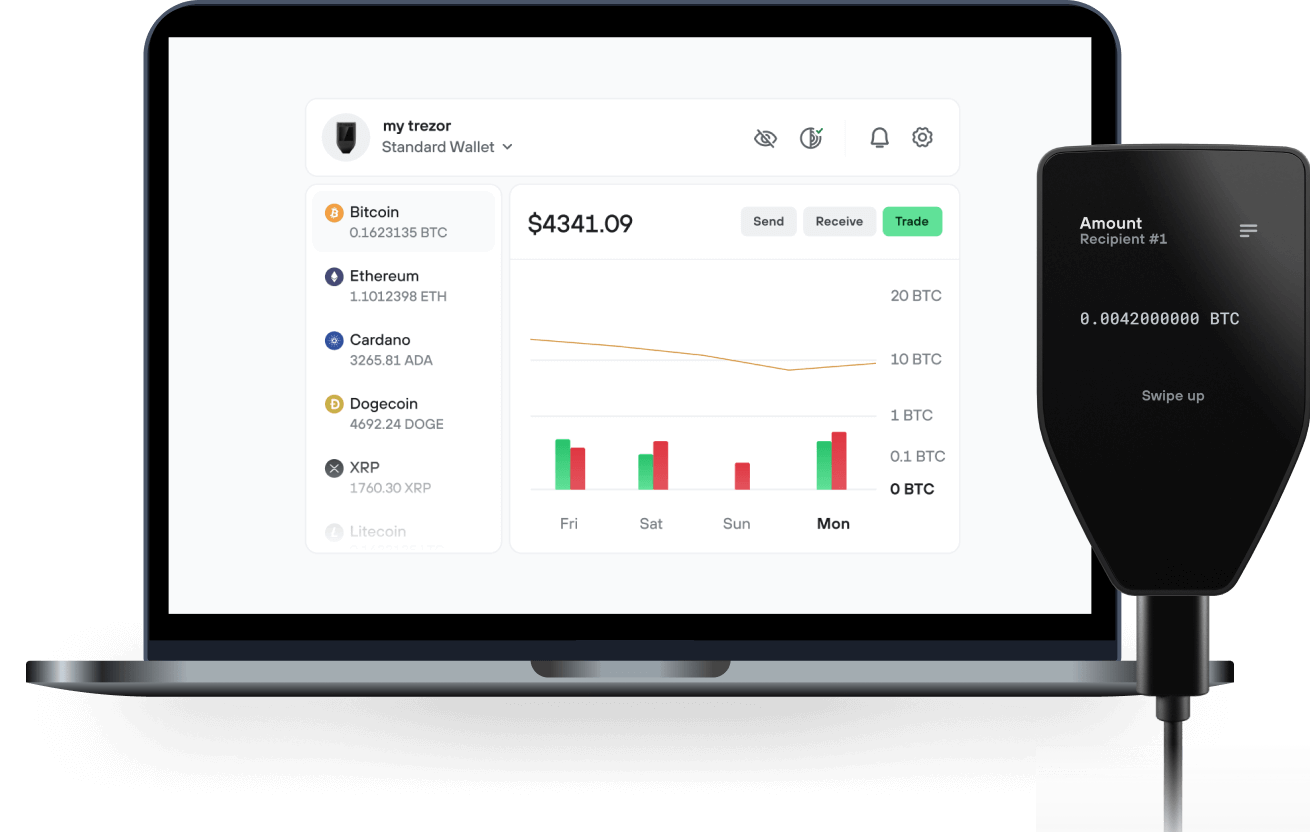
Send & receive your Umia with the Trezor Suite app

Send & receive
Trezor hardware wallets that support Umia
Sync your Trezor with wallet apps
Manage your Umia with your Trezor hardware wallet synced with several wallet apps.
Trezor Suite
MetaMask
Rabby
Supported Umia Network
Why a hardware wallet?

Go offline with Trezor
- You own 100% of your coins
- Your wallet is 100% safe offline
- Your data is 100% anonymous
- Your coins aren’t tied to any company
Online exchanges
- If an exchange fails, you lose your coins
- Exchanges are targets for hackers
- Your personal data may be exposed
- You don’t truly own your coins
How to UMIA on Trezor
Connect your Trezor
Open a third-party wallet app
Manage your assets
Make the most of your UMIA
Trezor keeps your UMIA secure
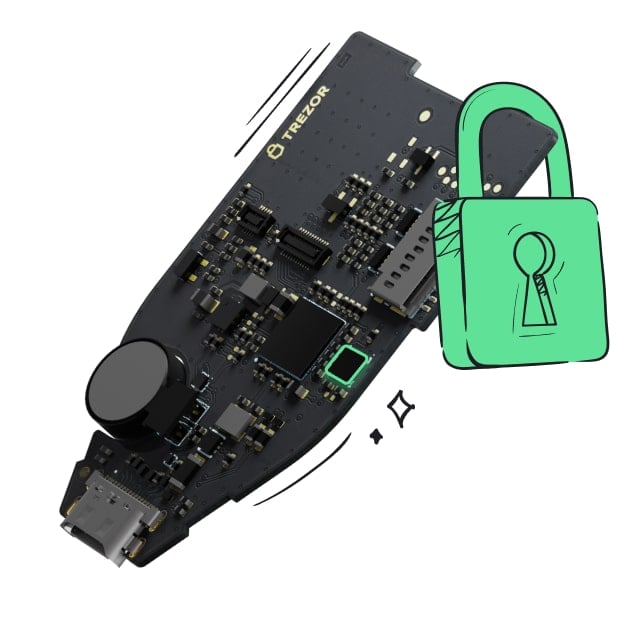 Protected by Secure Element
The best defense against both online and offline threats
 Your tokens, your control
Absolute control of every transaction with on-device confirmation
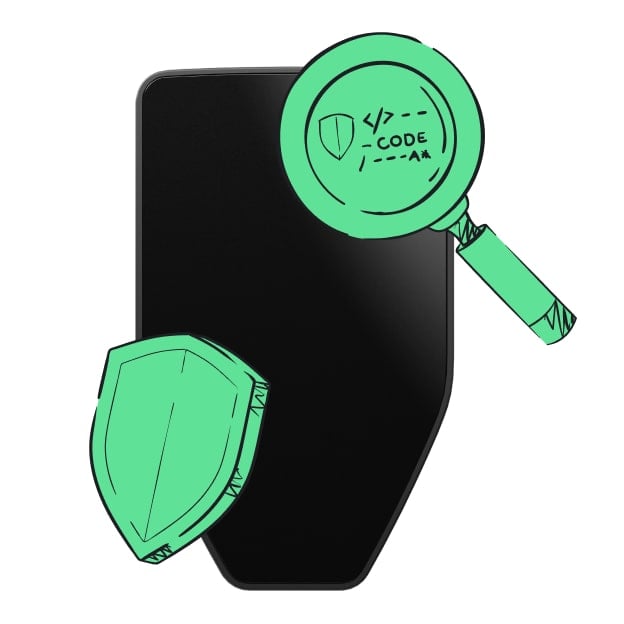 Security starts with open-source
Transparent wallet design makes your Trezor better and safer
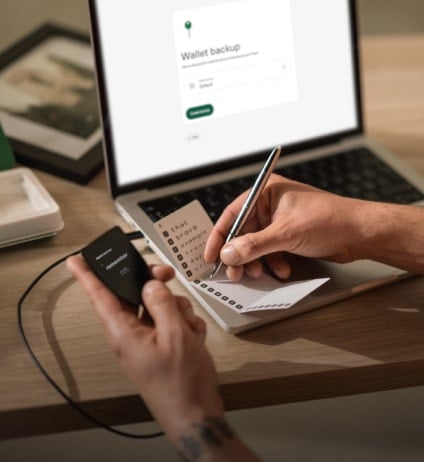 Clear & simple wallet backup
Recover access to your digital assets with a new backup standard
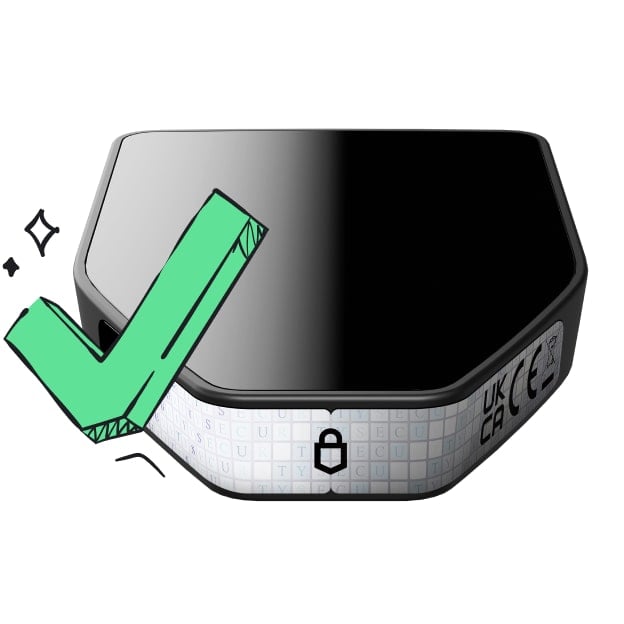 Confidence from day one
Packaging & device security seals protect your Trezor’s integrity
Umia is the onchain venture protocol. Founders apply to launch their token through Umia, raise funds in an open auction, and keep building while their tokenholders govern the project's treasury through decision markets.
Every project on Umia gets its own legal entity, holding the project's intellectual property, its team and its treasury. The funds it raises sit in an onchain treasury contract that the founding team cannot spend on its own. The team draws a monthly allowance, set at formation with recipient addresses and purpose limits, which pays out automatically for development and go-to-market; raising it is itself a decision the market has to approve.
Fundraising runs through a Tailored Auction, Umia's configuration of Uniswap's Continuous Clearing Auction (CCA): an onchain auction that discovers the token's price over a set window, with refundable bids. Parts of the sale can be reserved for a project's own community, with participants proving they qualify through zkTLS proofs generated in their browser by the Umia Extension, without revealing their identity, their accounts, or their data. Part of the proceeds automatically seeds a Uniswap v4 liquidity pool owned by the project's treasury.
Anything beyond that allowance, a large one-off spend, a new commitment or a change in compensation, goes to a decision market, an open market that prices what each option would do for the project.
UMIA is the token of the Umia protocol, an ERC-20 on Base. Holders direct the protocol's noncustodial treasury, its configuration including fees, and its strategic direction through decision markets, and auction participants hold that influence from day one. Holders also curate the Community Track, deciding which applying projects are admitted. Umia was the first project launched on its own platform, running under the same rules as every project that launches after it.