Safe & secure Hermes Protocol wallet
Take control of your Hermes Protocol assets with complete confidence in the Trezor ecosystem.
- Secured by your hardware wallet
- Use with compatible hot wallets
- Trusted by over 2 million customers
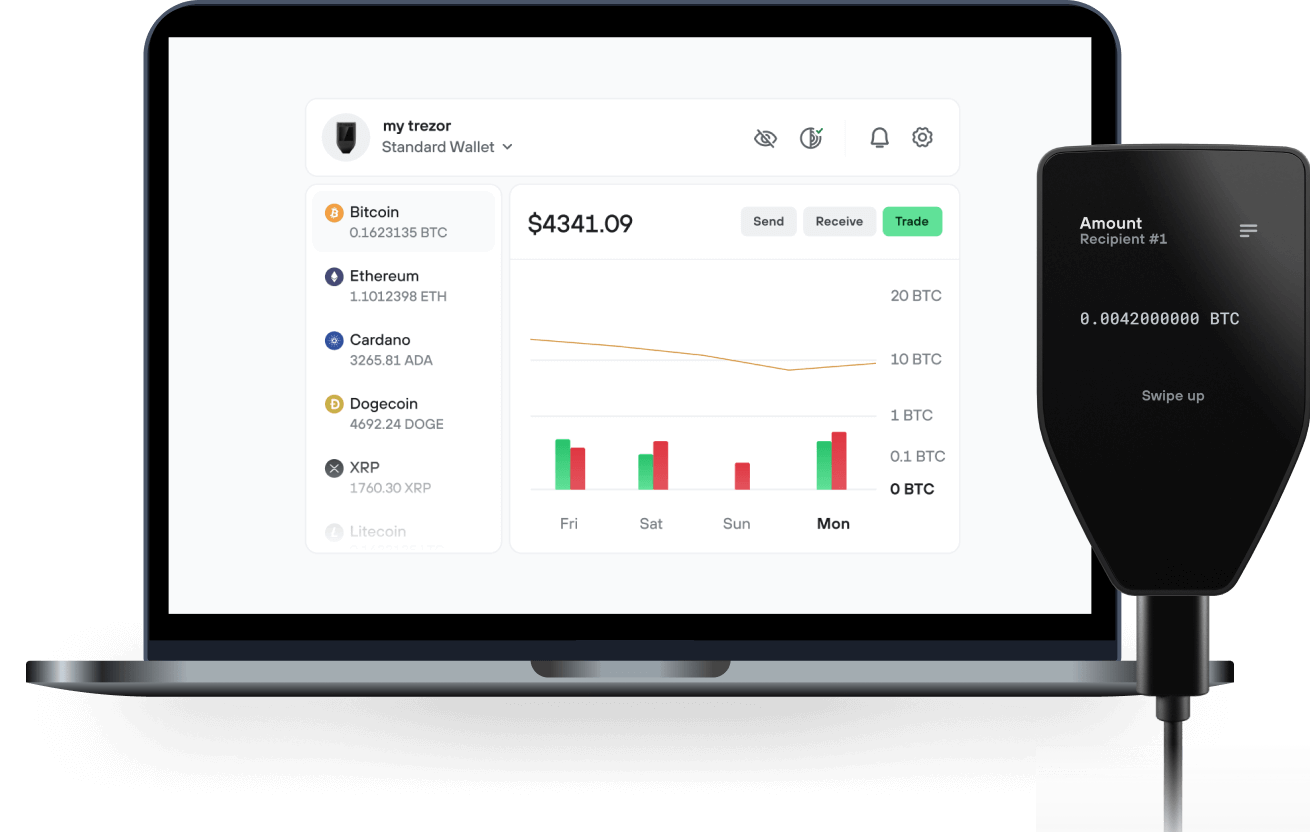
Send & receive your Hermes Protocol with the Trezor Suite app

Send & receive
Trezor hardware wallets that support Hermes Protocol
Sync your Trezor with wallet apps
Manage your Hermes Protocol with your Trezor hardware wallet synced with several wallet apps.
Trezor Suite
MetaMask
Rabby
Supported Hermes Protocol Network
Why a hardware wallet?

Go offline with Trezor
- You own 100% of your coins
- Your wallet is 100% safe offline
- Your data is 100% anonymous
- Your coins aren’t tied to any company
Online exchanges
- If an exchange fails, you lose your coins
- Exchanges are targets for hackers
- Your personal data may be exposed
- You don’t truly own your coins
How to HERMES on Trezor
Connect your Trezor
Open a third-party wallet app
Manage your assets
Make the most of your HERMES
Trezor keeps your HERMES secure
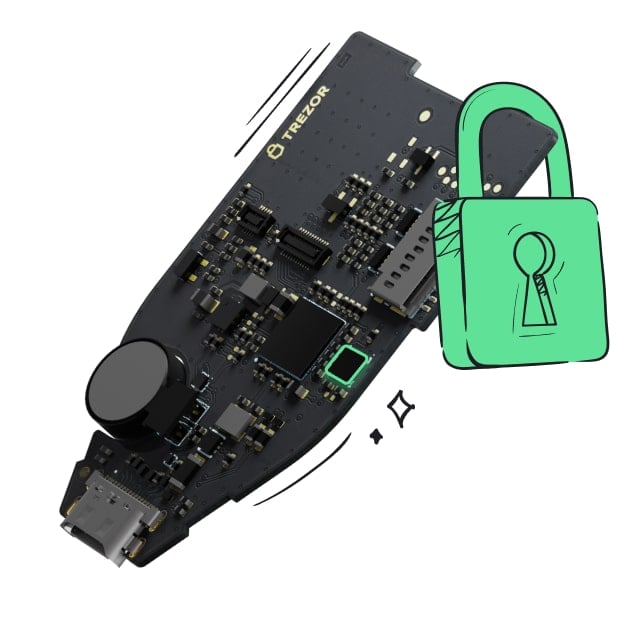 Protected by Secure Element
The best defense against both online and offline threats
 Your tokens, your control
Absolute control of every transaction with on-device confirmation
 Security starts with open-source
Transparent wallet design makes your Trezor better and safer
 Clear & simple wallet backup
Recover access to your digital assets with a new backup standard
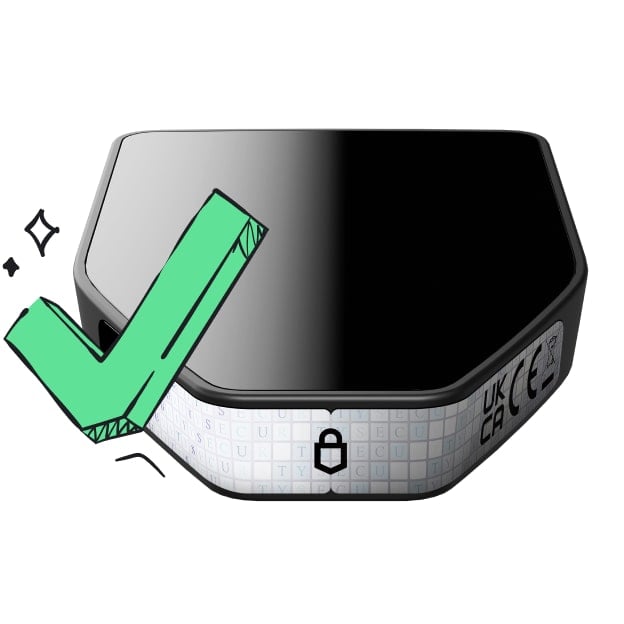 Confidence from day one
Packaging & device security seals protect your Trezor’s integrity
What is the project about? Hermes DEX main goal is to let users and other decentralized protocols exchange both volatile assets (DAI to WETH for example) and stablecoins (DAI to USDC for example) through it with low fees and low slippage. Unlike exchanges out there that match a buyer and a seller, the behavior of Hermes is different, it uses liquidity pools like Uniswap. To achieve this, Hermes needs liquidity (tokens) which is rewarded by those who provide it. Hermes is non-custodial meaning the Hermes developers do not have access to your tokens.
What makes your project unique? Stable coins have become an inherent part of cryptocurrency for a long time but they now come in many different flavors (DAI, TUSD, MIM, BUSD, USDC and so on) which means there is a much bigger need for crypto users to move from a stable coin to another. Centralized exchanges tend to have high fees which are problematic for those trying to move from a stable coin to another. As a result, Hermes Protocol has become the best place to exchange stable coins because of its low fees and low slippage. And Hermes also allows swaps with volatile assets.
History of your project. Hermes Protocol officially launched in February 2022 and started emissions in March 2022.
What’s next for your project? Introducing Yield and Concentrated Unified Liquidity Omnichain Marketplaces. Hermes V2 will offer multiple defi services compared to V1, while improving capital efficiency and user experience:
- Bridge-less omnichain environment, powered with concentrated (Uni V3) and unified liquidity.
- Decentralized Uniswap V3 Liquidity Management.
- Uniswap V3 Liquidity Incentives.
- Refined ve(3,3), becoming a fungible ERC-4626
- Improved UX and UI
- Omnichain Yield marketplace
What can your token be used for? Hermes token when staked for veHermes allows liquidity providers to take decisions on adding new gauges, boosting gauge yields, voting on token emission, and receive bribes.