Safe & secure Atrium Hermes wallet
Take control of your Atrium Hermes assets with complete confidence in the Trezor ecosystem.
- Secured by your hardware wallet
- Use with compatible hot wallets
- Trusted by over 2 million customers
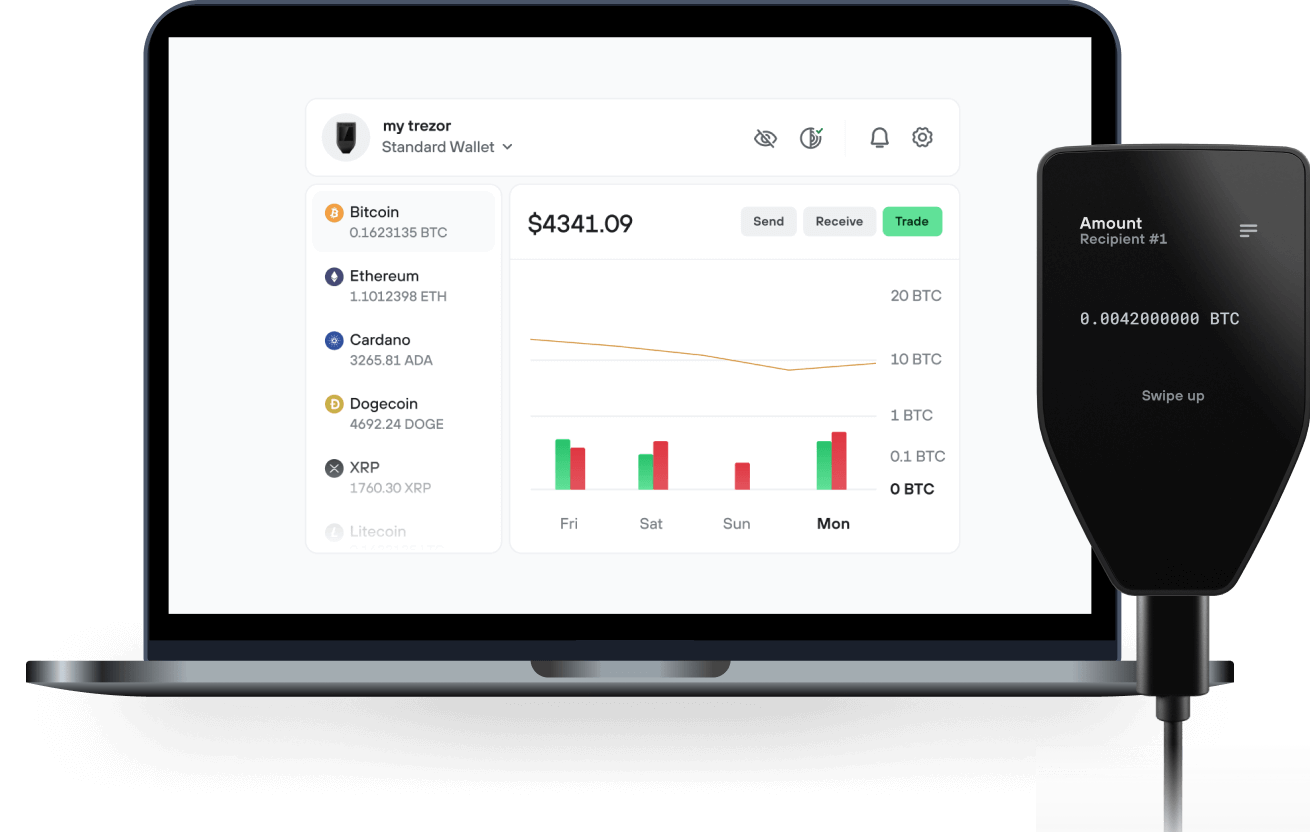
Send & receive your Atrium Hermes with the Trezor Suite app

Send & receive
Trezor hardware wallets that support Atrium Hermes
Sync your Trezor with wallet apps
Manage your Atrium Hermes with your Trezor hardware wallet synced with several wallet apps.
Trezor Suite
MetaMask
Rabby
Supported Atrium Hermes Network
Why a hardware wallet?

Go offline with Trezor
- You own 100% of your coins
- Your wallet is 100% safe offline
- Your data is 100% anonymous
- Your coins aren’t tied to any company
Online exchanges
- If an exchange fails, you lose your coins
- Exchanges are targets for hackers
- Your personal data may be exposed
- You don’t truly own your coins
How to ATRIUM on Trezor
Connect your Trezor
Open a third-party wallet app
Manage your assets
Make the most of your ATRIUM
Trezor keeps your ATRIUM secure
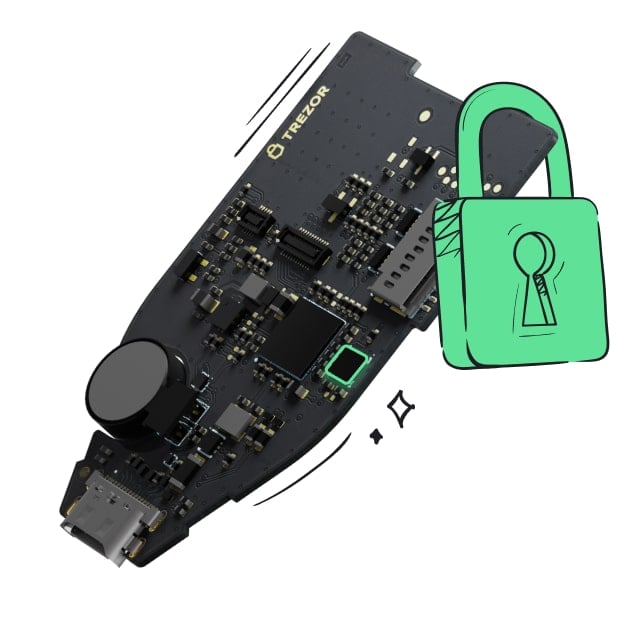 Protected by Secure Element
The best defense against both online and offline threats
 Your tokens, your control
Absolute control of every transaction with on-device confirmation
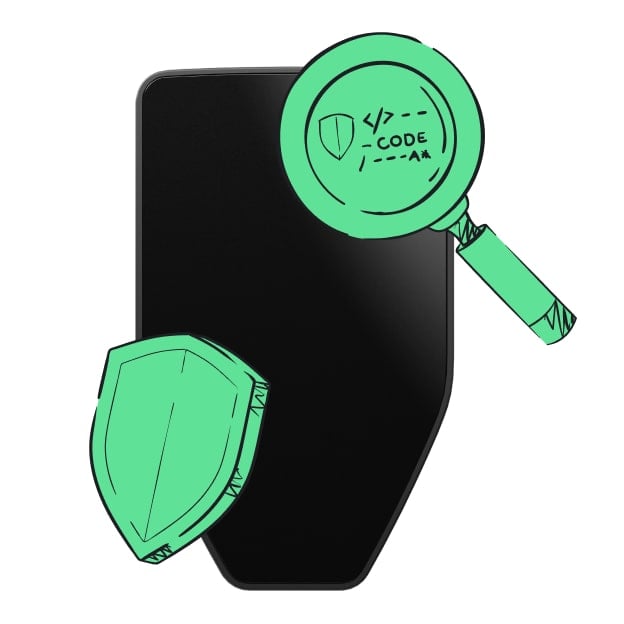 Security starts with open-source
Transparent wallet design makes your Trezor better and safer
 Clear & simple wallet backup
Recover access to your digital assets with a new backup standard
 Confidence from day one
Packaging & device security seals protect your Trezor’s integrity
Atrium is the economic and identity layer beneath existing agent runtimes, not a new runtime. A skill is to an AI agent what an npm package is to a Node program, but signed by its author, addressed by its content, and paid per call. AI agent runtimes increasingly generate reusable skills, but those skills are trapped inside the runtime that produced them — no portable record of authorship, no way to verify what a consumer is about to run, and no mechanism to compensate authors when their work is reused. This paper specifies the manifest format, the on-chain settlement contract and its conservation invariants, the royalty model, the threat model, and the off-chain architecture, and argues that a tokenless, per-invocation design is the right primitive for an emerging skill economy.