ご注意:当社記事は現在英語のみでのご提供となっています。
Connect MetaMask to your Trezor
Use MetaMask with your Trezor to manage Ethereum and EVM assets while your private keys stay on the device.
What is MetaMask?
MetaMask is a non-custodial multichain wallet. When you pair it with your Trezor, you can use Ethereum and other EVM networks such as Arbitrum, Base and Polygon, including ones that are not available in Trezor Suite. Every transaction is still approved on your device.
How to connect MetaMask to your Trezor
Do not enter your Trezor wallet backup into MetaMask or any app, website, or extension. Once those words are typed into connected software, they are no longer offline, and your wallet's security is weakened.
1. Open Trezor Suite and connect your Trezor
Open Trezor Suite on your computer. Plug in your Trezor with a cable, or connect over Bluetooth if it supports it. Unlock it with your PIN.
If you use a passphrase, enter it when you unlock your Trezor. Your passphrase wallet is separate, so pair with the passphrase active to see its accounts. For more information, read our article Using a passphrase wallet in Trezor Suite.
2. Open MetaMask and pair with Trezor
Install the MetaMask browser extension only from MetaMask's official site or the browser store listing linked there, since fake wallet extensions are used to steal funds.
MetaMask creates its own wallet before you can add your Trezor. Select Create a new wallet, then Use Secret Recovery Phrase. Write down the Secret Recovery Phrase that MetaMask shows you, and keep it separate from your Trezor wallet backup.
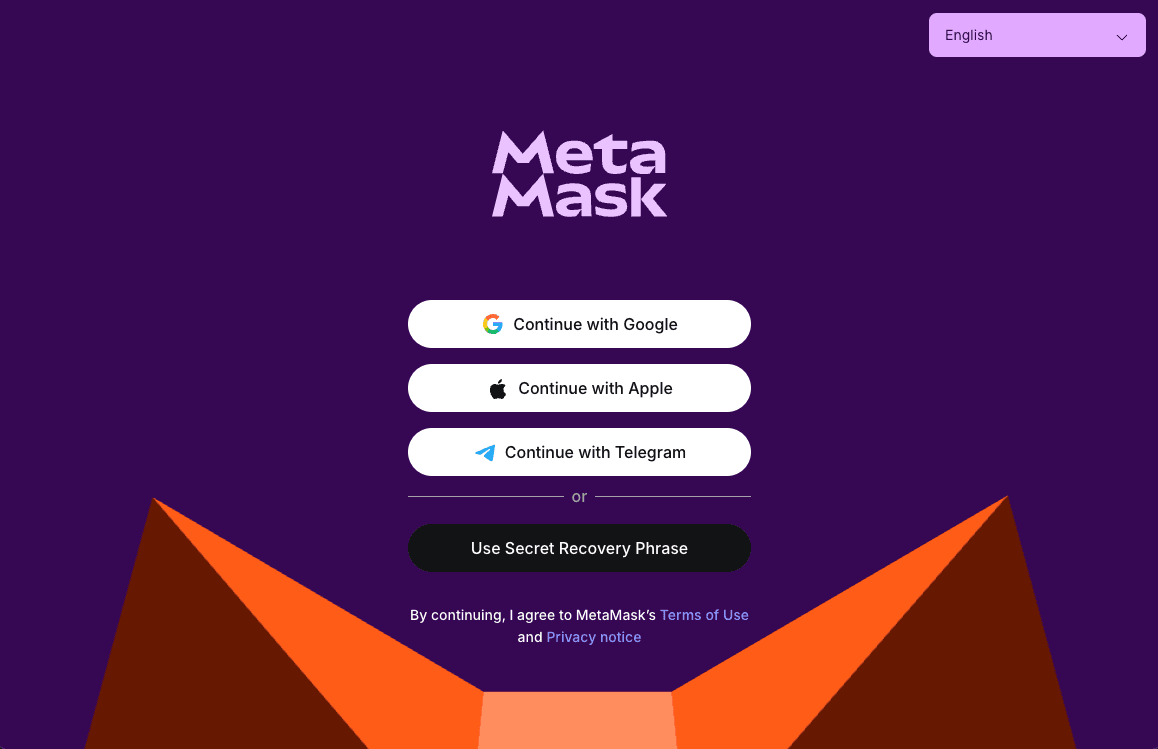
MetaMask then asks you to create a password. This password only unlocks MetaMask on your computer, and MetaMask can't reset it.
MetaMask and your Trezor have separate backups. MetaMask's Secret Recovery Phrase restores the accounts MetaMask creates. Your Trezor wallet backup, and passphrase if you use one, restores your Trezor accounts. If you forget your MetaMask password or reinstall MetaMask, your Trezor accounts are not affected. Connect your Trezor to any MetaMask wallet to use them again.
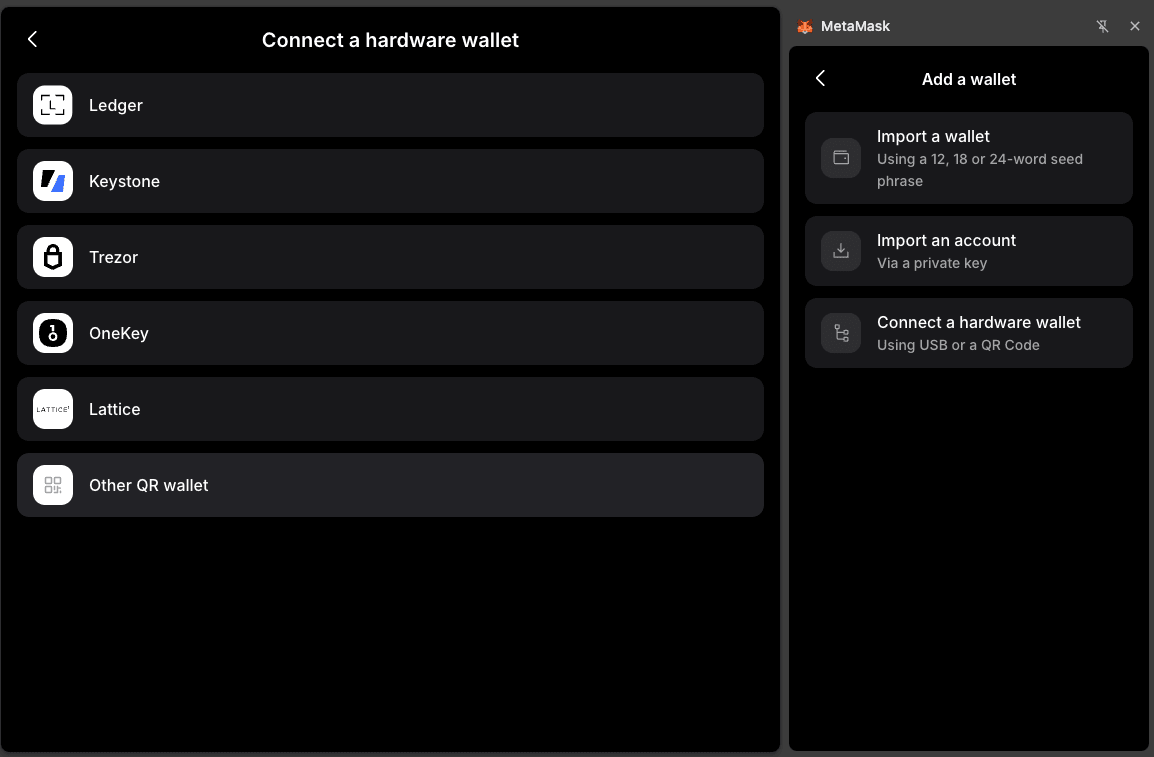
To pair, select your account name at the top of MetaMask, then select Add wallet. Select Connect a hardware wallet, then Trezor. Your browser asks to connect to your Trezor. Select your Trezor in the list, then select Connect.
3. Approve the connection in Trezor Suite
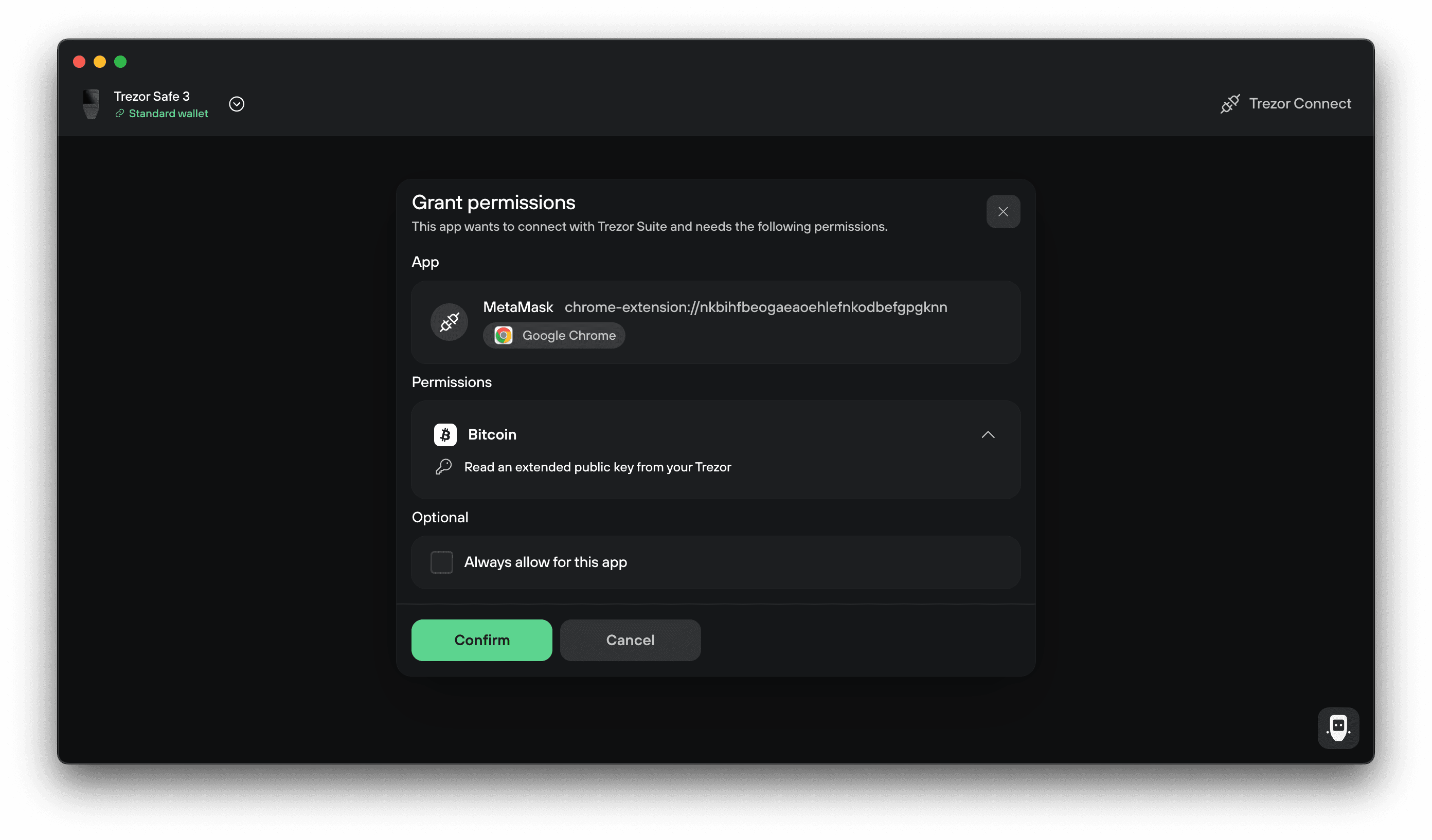
MetaMask opens Trezor Connect in Trezor Suite. Review the permission request and select Confirm. You can select Always allow for this app to skip this step next time.
Trezor Suite then shows the accounts that will be shared. Only your public keys are shared. Your private keys never leave the Trezor, which is why you confirm every outgoing transaction on the device. Select Confirm.
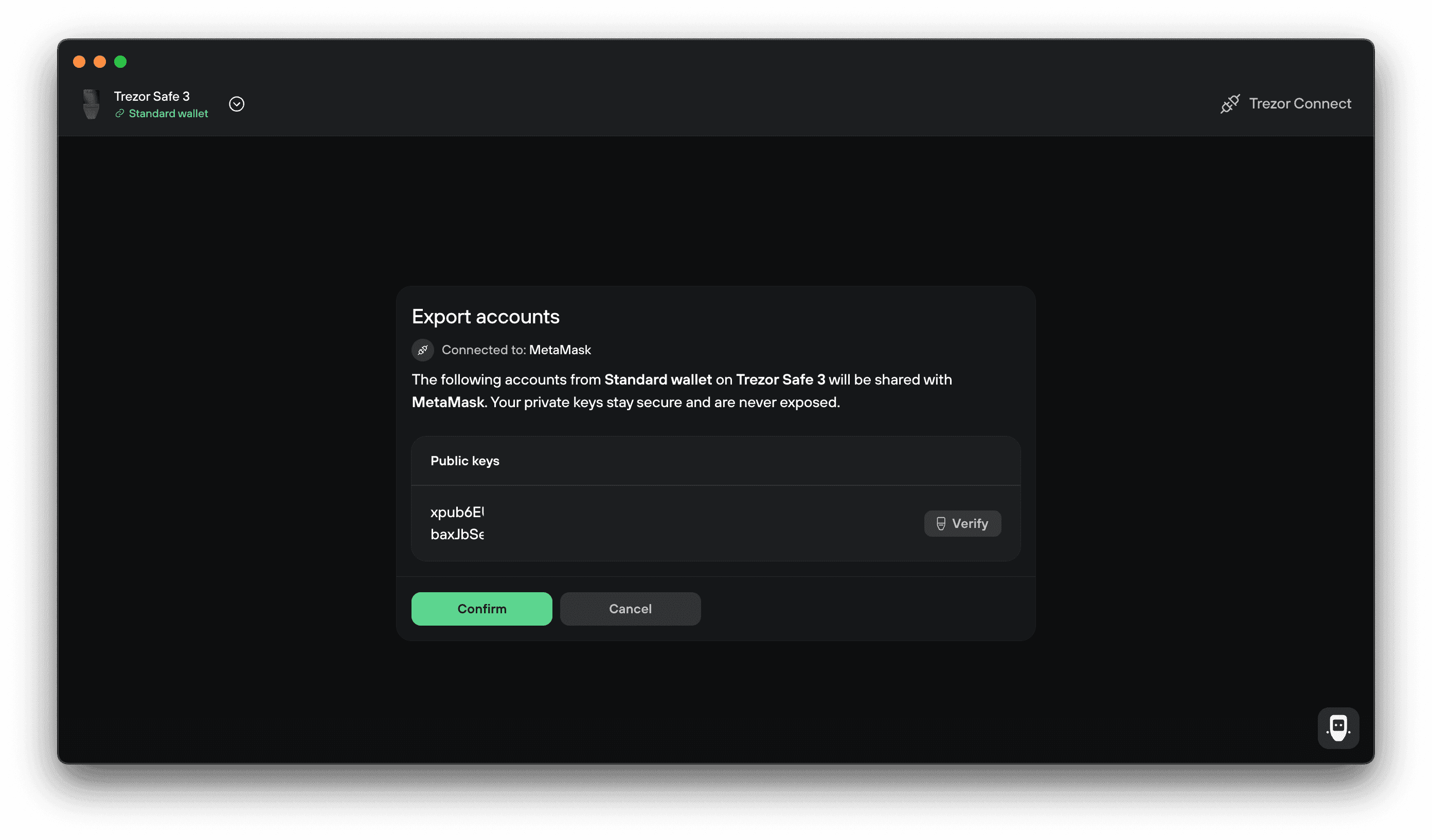
Trezor Suite confirms the export. Select Verify to check that the key shown in Trezor Suite matches the one on your Trezor screen, then select Close.
4. Finish in MetaMask
Back in MetaMask, select the accounts you want to use, then select Unlock. Your Trezor accounts are now ready to use in MetaMask.
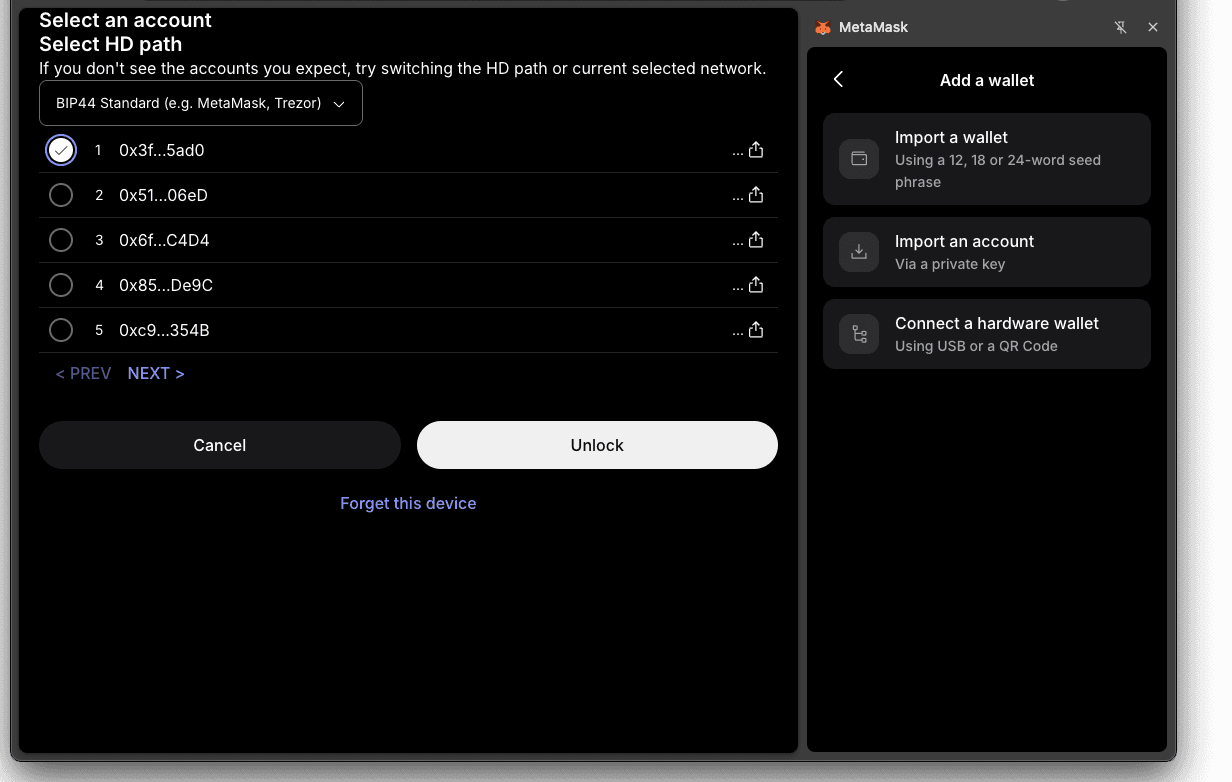
To remove your Trezor from MetaMask, open this screen again and select Forget this device.
Watch how to use Trezor with MetaMask
This video shows how to connect your Trezor to MetaMask and approve transactions on your device.
Accounts, addresses, and what shows in Trezor Suite
When you pair, you choose which accounts to use with MetaMask.
If an asset is supported by Trezor Suite, it will also show there. Assets on networks that Trezor Suite does not support are visible only in MetaMask.
Select the addresses you want to use. They are shared in order, so if you pick the third address, it will not appear in Trezor Suite until you have used the second one.
Different derivation paths, called HD paths in MetaMask, exist so you can match addresses created in other wallets. Each path shows different addresses, and they all belong to the same Trezor. You can switch paths on the account selection screen, under Select HD path. Keep BIP44 Standard unless you need to match addresses from another wallet.
If your accounts or balances do not look right, the most common cause is a different passphrase or wallet than the one used to create them. For more help, contact Chatbot Hal.
Which Trezor devices work with MetaMask
All Trezor devices work with MetaMask. What differs is which coins each device supports. Some networks are not available on Trezor Model One.
Check that your device supports the coins you want to use at trezor.io/coins.
Trezor Model T, Safe 3, Safe 5 and Safe 7 show supported smart contract transactions in plain language on the device screen. This is called clear signing. Trezor Model One does not support clear signing, so it shows raw transaction data instead.
To learn which transactions show in plain language, see Clear Signing on Trezor.