ご注意:当社ブログ記事は現在英語のみでのご提供となっています。

What is a hardware wallet? A 2-minute guide

Key takeaways:
- Hardware wallets offer one of the safest solutions for storing cryptocurrencies
- With hardware wallets being offline, you have complete ownership of your digital assets, and your data remains 100% anonymous
- In the event of a lost or damaged hardware wallet, the seed phrase allows you to recover your crypto on a new device
- Hardware wallets are protected from online threats and cyberattacks, ensuring the safety, security, and privacy of your digital assets.
In the world of cryptocurrencies, safeguarding your digital assets is paramount. As the popularity of cryptocurrencies soar, so do the threats from hackers and malicious actors. This is where hardware wallets come into play, offering a secure and reliable solution for safeguarding your crypto.
In this post, we’ll demystify the concept of hardware wallets and explain why they are considered one of the safest options for crypto storage.
What is a crypto wallet?
Put simply, a crypto wallet is a digital tool that enables you to send, receive, and store your crypto securely.
Broadly crypto wallets can be categorised as,
Hot Wallets: Cryptocurrency wallets connected to the internet. Web, mobile, and desktop wallets fall into this category. These wallets offer the convenience of being always online, making them suitable for small, everyday transactions. However, this even makes them vulnerable to cyber-attacks and hacks. Cold Wallets: Cold wallets are cryptocurrency wallets not connected to the internet. This means they never expose your recovery seed or private keys to an online environment.
Before moving on, you need to know this. Contrary to popular belief, a wallet does not store your coins. As a crypto owner, you don’t store crypto on your hardware wallet — you use it to store your private keys. Please read Where are my coins stored? for more information.
OK. So, what exactly is a hardware wallet?
A summary of what we know so far. A hardware wallets function as your key manager. These wallets securely generate and store your private key offline, use this private key to enable crypto transactions, and generate public keys for receiving crypto.
Think of it as a special, small safe for your digital assets. Here's what it looks like:
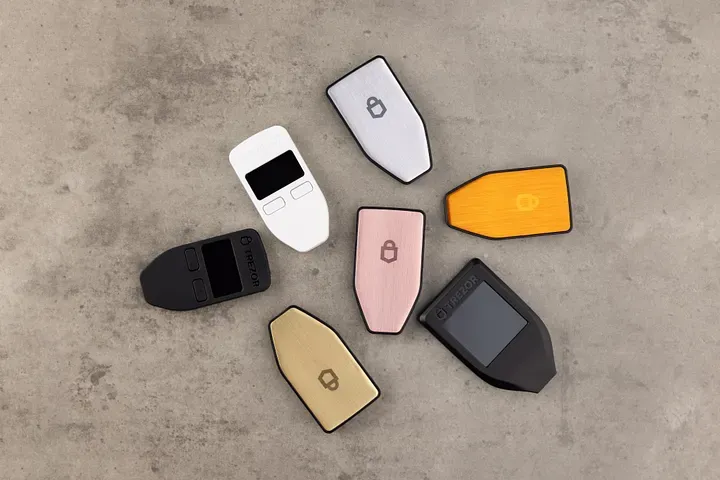
The important thing about this safe is that it’s not connected to the internet. It stays offline, not exposing your private key to the internet and potential hackers. When you want to use your crypto or add more to your safe, connect the wallet to a computer or a phone. Once it’s connected, you can buy, sell, or exchange your crypto.
Fun fact: The world’s first hardware wallet, the Trezor Model One, was launched in 2014.
Why Hardware Wallets?
You probably know this by now. It's simple. Given that these wallets are entirely offline
- You own 100% of your coins
- Your wallet is 100% safe offline
- Your data is 100% anonymous
But, what if my wallet gets lost or damaged?
Your coins remain safe! If your device is lost, damaged, or stolen, you can use your recovery seed to restore access to your entire wallet, passwords, and other data associated with it. You only have to enter the words of your seed into your new Trezor device. Here are some of the best practices for keeping your recovery seed safe (you may want to bookmark this).