Portefeuille sûr et sécurisé Ajna Protocol
Prenez le contrôle de vos Ajna Protocol actifs en toute confiance dans l’écosystème Trezor.
- Sécurisé par votre portefeuille matériel
- Utiliser avec des hot wallets compatibles
- Adopté par plus de 2 millions de clients
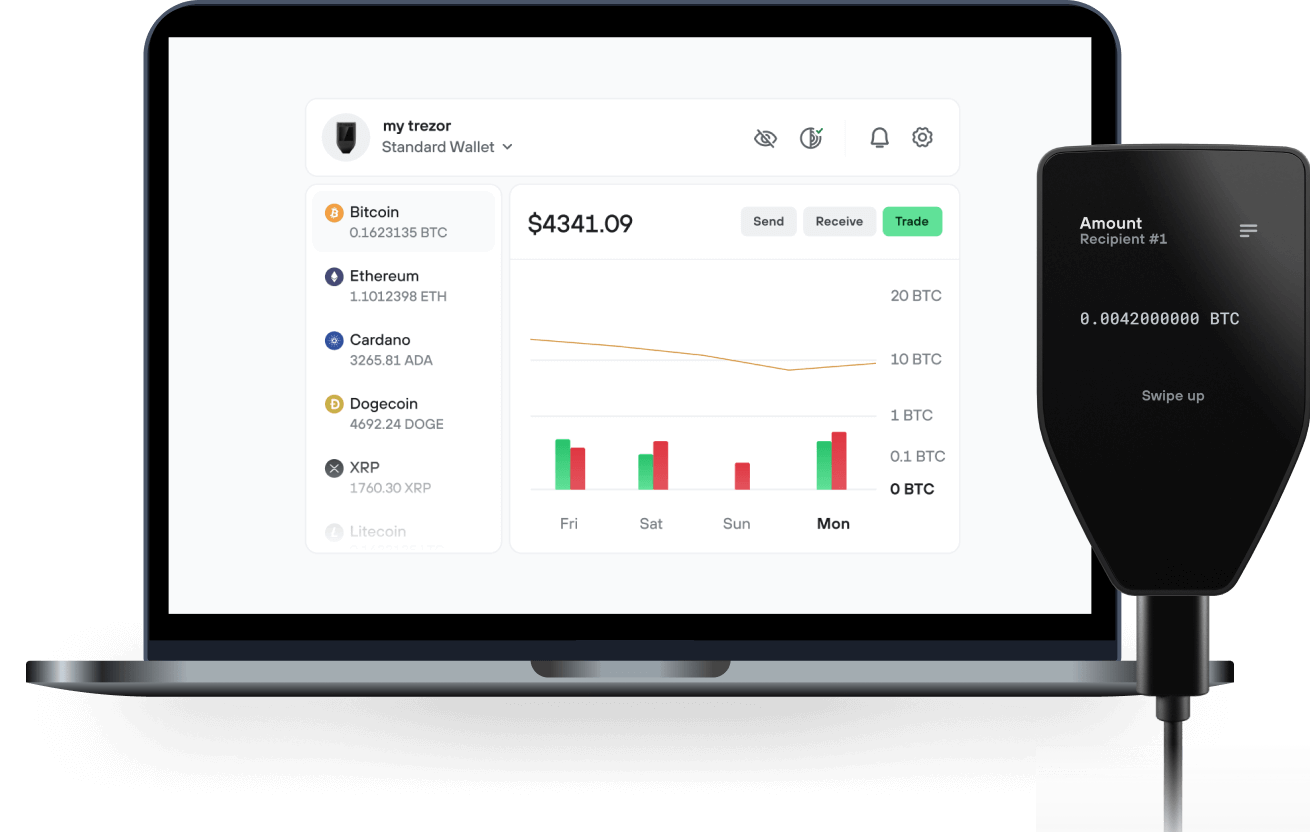
Envoyez et recevez vos Ajna Protocol avec l'application Trezor Suite

Envoyer et recevoir

Swap
Portefeuilles matériels Trezor qui supportent Ajna Protocol
Synchronisez votre Trezor avec des applications de portefeuille
Gérez vos Ajna Protocol avec votre portefeuille matériel Trezor synchronisé avec plusieurs applications de portefeuilles.
Trezor Suite
MetaMask
Rabby
Ajna Protocol Réseaux supportés
Pourquoi un portefeuille matériel ?

Allez hors ligne avec Trezor
- Vous possédez 100% de vos cryptos
- Votre portefeuille est 100% sécurisé hors ligne
- Vos données sont 100 % anonymes
- Vos cryptos ne dépendent d’aucune entreprise
Échanges en ligne
- Si un échange échoue, vous perdez vos cryptos
- Les échanges sont des cibles pour les pirates
- Vos données personnelles peuvent être exposées
- Vous ne possédez pas réellement vos cryptos
Comment utiliser AJNA sur Trezor
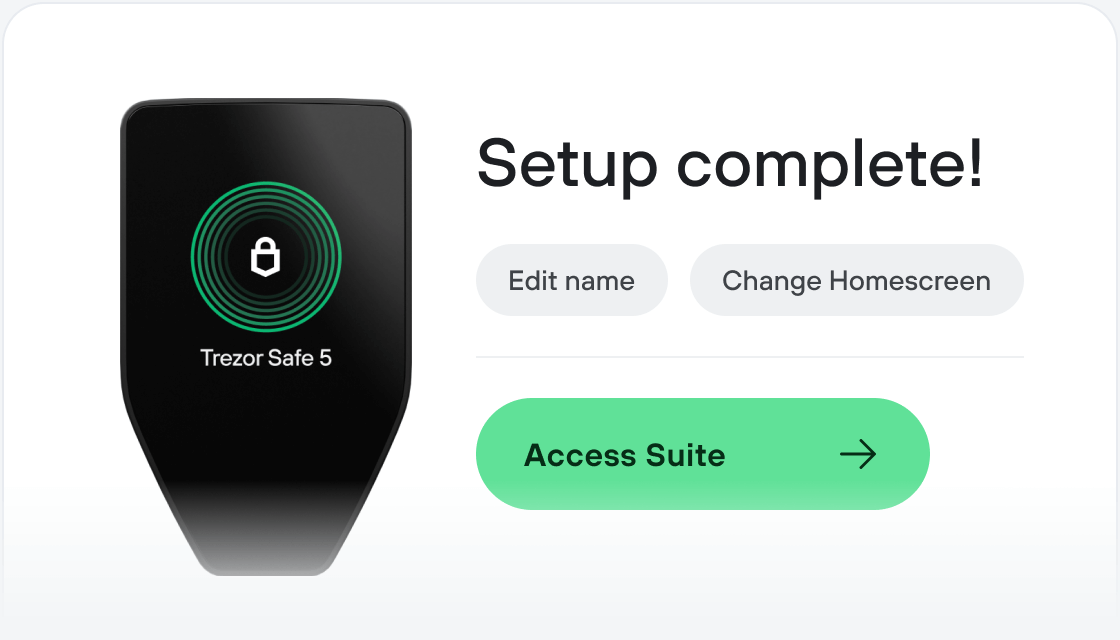
Connectez votre Trezor
Installez l'application Trezor Suite
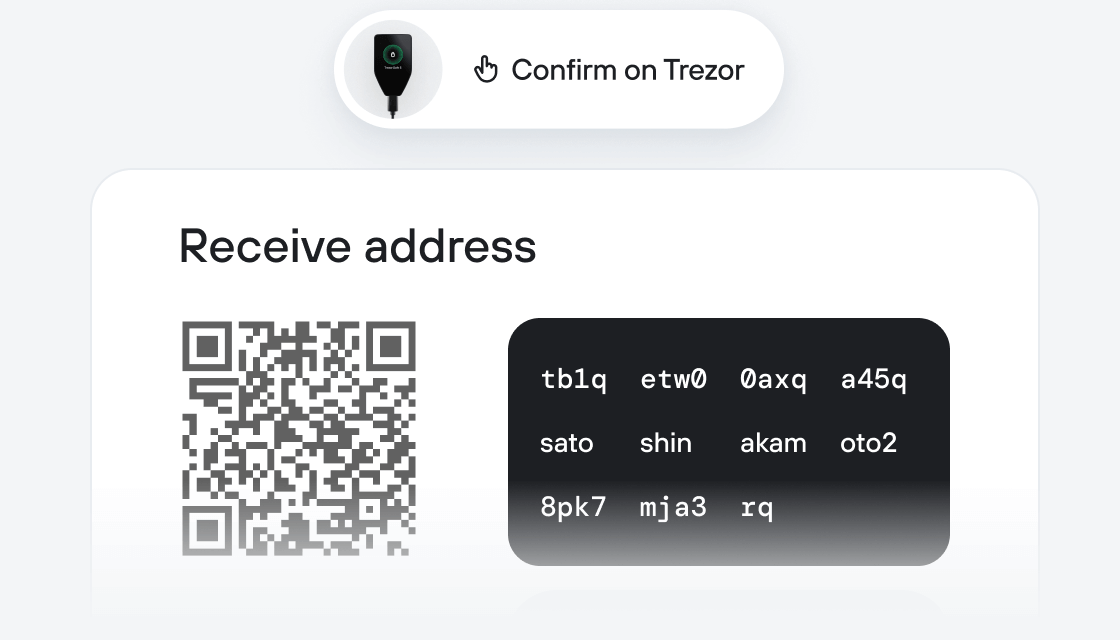
Transférez votre AJNA
Profitez pleinement de votre AJNA
Trezor garde vos AJNA en sécurité
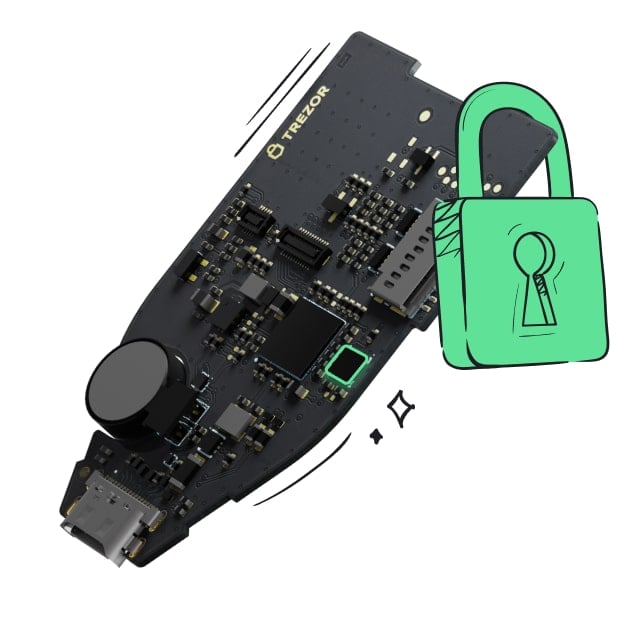 Protégé par Élément Sécurisé
La meilleure défense contre les menaces en ligne et hors ligne
 Vos jetons, votre contrôle
Contrôle absolu de chaque transaction avec confirmation sur l'appareil
 La sécurité commence par l'open source
Le design de portefeuille transparent rend votre Trezor meilleur et plus sûr
 Sauvegarde de portefeuille claire et simple
Récupérez l’accès à vos actifs digitaux avec un nouveau standard de sauvegarde
 Confiance depuis le premier jour
Les sceaux de sécurité sur l’emballage et l’appareil protègent l’intégrité de votre Trezor
The Ajna protocol facilitates peer-to-pool secured loans without governance and without external price feeds. Current lending and borrowing protocols which utilize smart contracts require active governance (e.g. to set rates and to update contracts) and/or rely on external price feeds (such as oracles like Chainlink). Because the pricing of collateral and parameterization of loans are left to subjective decision making through governance rather than market forces, these protocols carry both solvency and liquidity risk. Governance and maintenance overhead create barriers to entry in the market for lending and borrowing of on-chain assets. Ajna solves these problems with its unique design, which is defined by the following features:
Permissionless pool creation: Much like the popular DeFi primitive, the “automated market maker,” AMM, Ajna pools exist in unique pairs: quote token, provided by lenders and collateral token, provided by borrowers. Pools allow lenders to assess borrower demand for their quote token and for borrowers to assess lender demand for loans backed by their collateral. Pools are created permissionlessly, meaning anyone can create a pool to borrow arbitrary fungible tokens using arbitrary fungible or non-fungible tokens as collateral. Therefore, no governance process is needed to whitelist approved tokens.
Price specified lending: Ajna replaces external price feeds (oracles) by allowing lenders to input the price at which they’re willing to lend. This price is the amount of quote token (i.e. the token they are lending) they are willing to lend per unit of collateral pledged by the borrower. For example, if a lender deposits at price 100, they are willing to lend 100 units of quote token per one unit of collateral. Ajna pools separate prices into predefined buckets to reduce the complexity of the protocol, prices are therefore hereon referred to as “buckets”. Borrowers are then able to borrow from the aggregated liquidity of these various buckets.