安全可靠的 Truebit Protocol 钱包
通过 Trezor 生态系统,全面自信地掌控您的Truebit Protocol资产。
- 由您的硬件钱包保护
- 搭配兼容的热钱包使用
- 全球超 200 万用户信赖
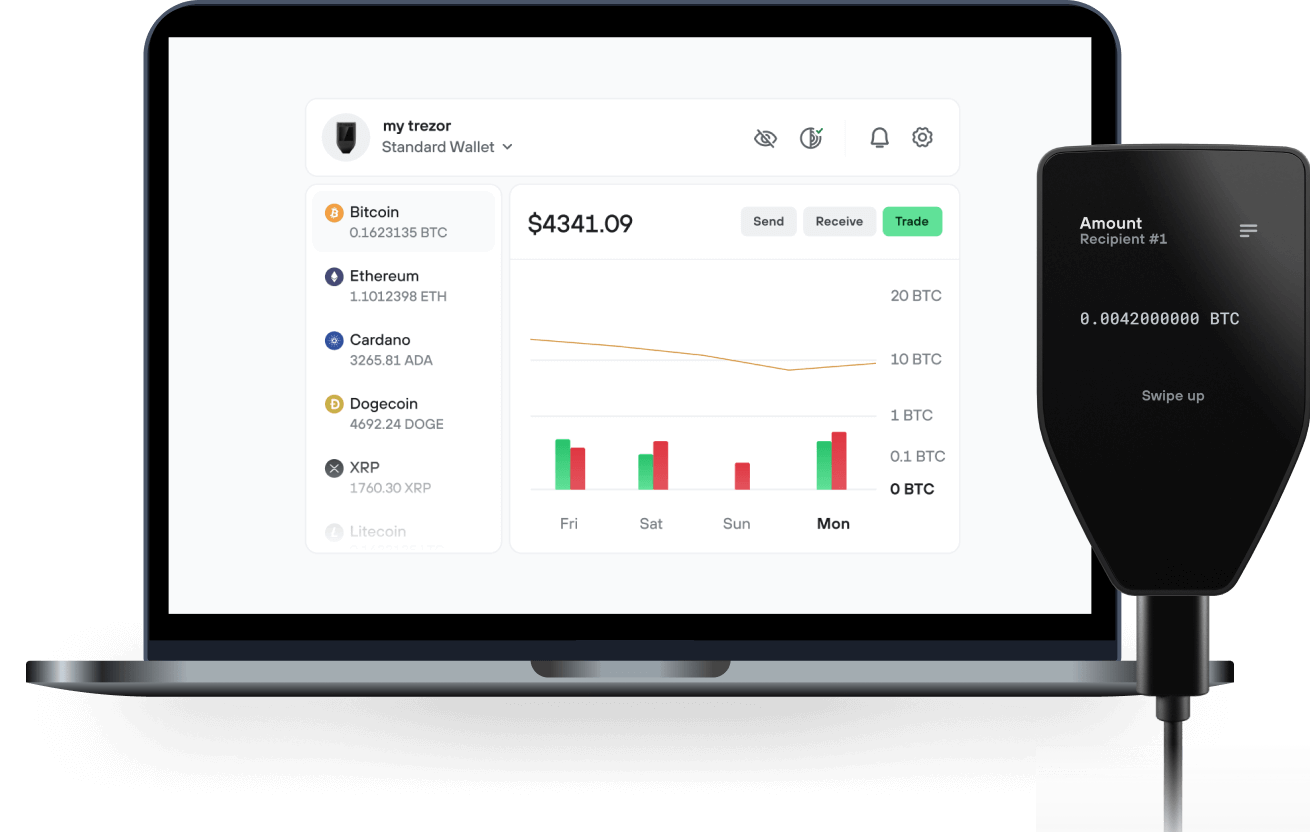
收发您的 Truebit Protocol 通过 Trezor Suite 应用

收发
兑换
支持Truebit Protocol的 Trezor 硬件钱包
让您的 Trezor 同步至钱包应用
通过将 Trezor 硬件钱包与多个钱包应用同步,管理您的 Truebit Protocol。
Trezor Suite
MetaMask
Rabby
支持的Truebit Protocol网络
为什么要用硬件钱包?
离线安全保护,尽在 Trezor
- 您 100% 拥有您的加密货币
- 离线保护私钥,大幅降低在线攻击风险
- 您的数据 100% 匿名
- 您的加密货币不受任何公司控制
在线交易所
- 若交易所出现问题,您将失去加密货币
- 交易所是黑客攻击的目标
- 您的个人数据可能会被暴露
- 您并不真正拥有您的加密货币
如何在 Trezor 上使用TRU
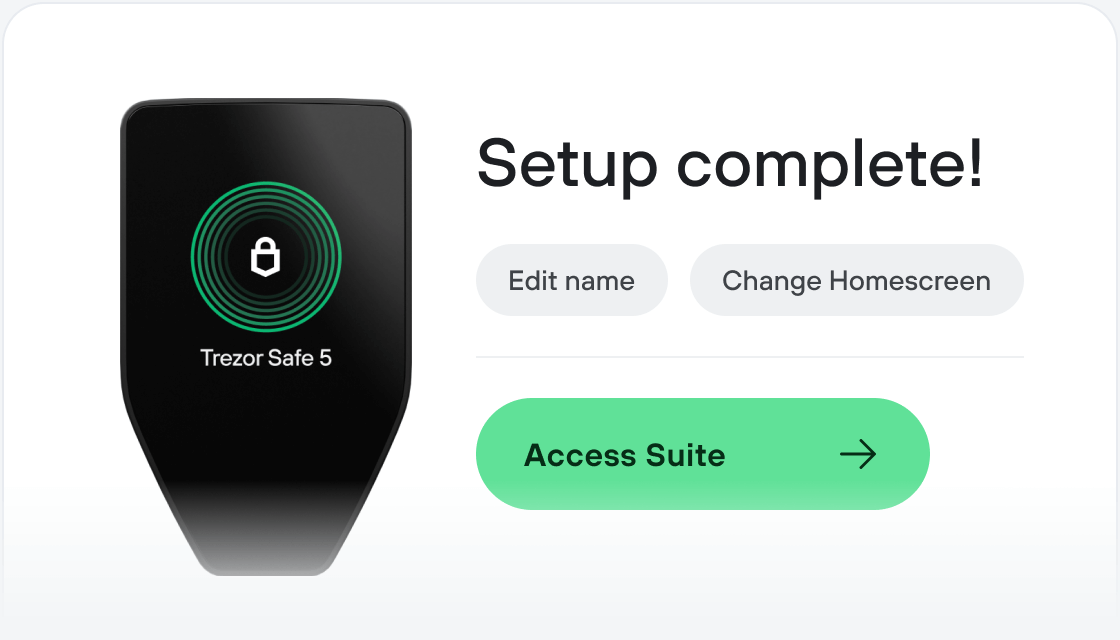
请连接您的 Trezor 设备
安装 Trezor Suite 应用
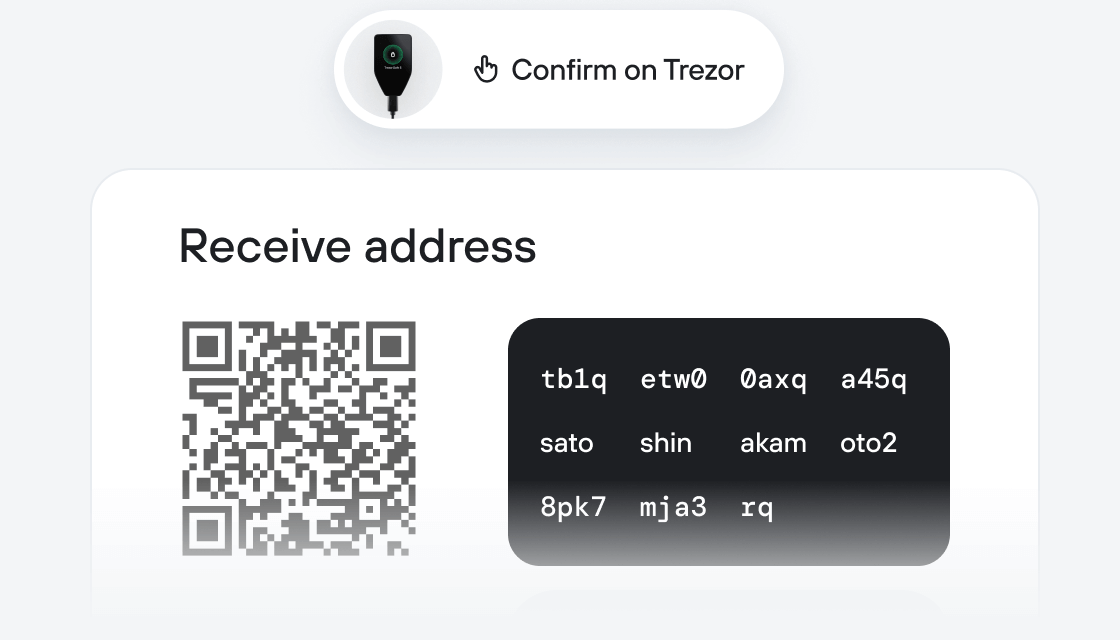
转账您的 TRU
充分利用您的 TRU
Trezor 助您安心管理 TRU
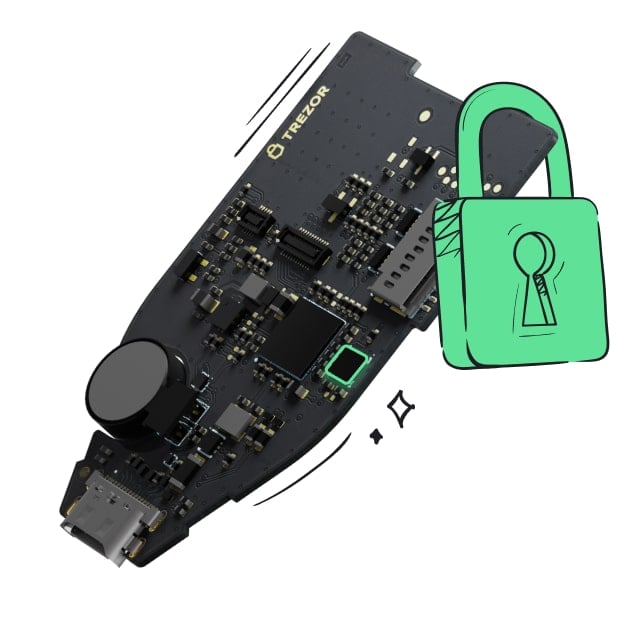 受安全芯片保护
对抗在线与离线威胁的可靠防线
 您的代币,您做主
通过设备确认,全面掌控每笔交易
 安全始于开源
透明钱包设计让您的 Trezor 更优更安全
 清晰简单的钱包备份
采用新备份标准恢复您的数字资产访问权限
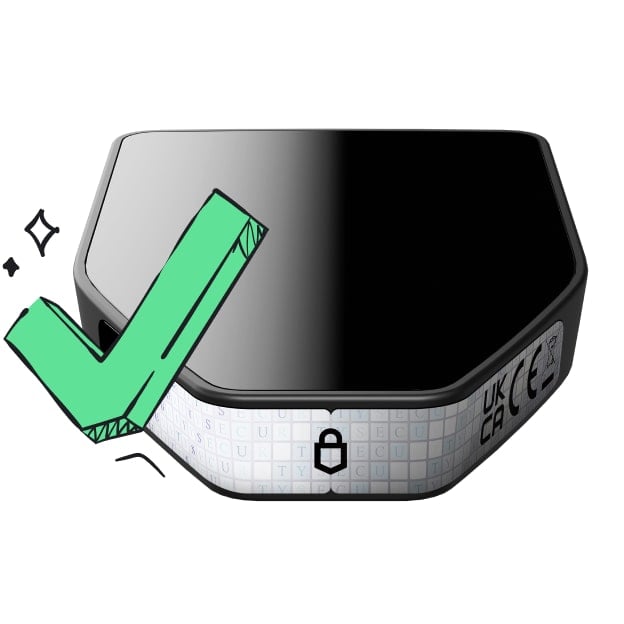 从第一天起就信心十足
包装与设备防拆封条共同保障 Trezor 设备完整性
What Is Truebit (TRU)?
Truebit allows software running outside a blockchain environment to provide trusted results to smart contracts and applications running within a blockchain. The platform allows practically unlimited external compute resources to be applied in a trusted way to extend the performance, throughput, and scalability of its host blockchain. Research began in 2015 on this verification solution which today connects blockchains to both on-chain and off-chain data while enabling smart contracts to securely perform complex computations in standard, easy-to-use programming languages at significantly reduced gas costs.
Unlike sharding and other methods for distributing high transaction throughput, Truebit processes complex and large transactions via a consensus mechanism involving a minimal number of redundancies, making it a novel solution for Web 3.0 infrastructure. The bulk of computation occurs with off-chain resources.
Verifier’s Dilemma - What Makes Truebit Unique?
Rather than relying on external, cryptographic proofs of correctness, Truebit brings scalable computation to blockchains by leveraging game theory principles and financial incentives to increase the on-chain computation power of existing networks and reduce marginal gas costs.
While smart contracts can perform small computations correctly, large computation tasks pose security risks for blockchains due to the Verifier's Dilemma. Truebit counteracts this via a retrofitting oracle that achieves correct computational results. Truebit’s microeconomy ensures trustless verification through a financial incentive layer atop a dispute resolution layer.
Who is the founder of Truebit (TRU)?
Truebit was founded by mathematician and computer scientist Jason Teutsch who co-authored the whitepaper with Ethereum’s Solidity creator and team lead, Christian Reitwiessner. Jason holds a PhD in Mathematics, was a two-time US Fulbright Fellow, and co-discovered the Verifier’s Dilemma.
Applications
Applications include: Layer-2 settlements DeFi settlements and bookkeeping Batch verification of cryptographic signatures Checking proof-of-work Performing operation(s) with high computational complexity
Any smart contract can issue a computation task to Truebit in standard languages (C, C++, or Rust) without concern for Ethereum’s gas limit. Truebit’s WebAssembly-based architecture can read functions and data from Ethereum bytes, smart contract program code, or IPFS.
What kind of token is Truebit (TRU)?
The supply of TRU tokens may fluctuate over time.
Learn more about Truebit:
Getting started with Truebit on Ethereum https://medium.com/truebit/getting-started-with-truebit-on-ethereum-ac1c7cdb0907 An Intro to TrueBit: A Scalable, Decentralized Computational Court https://medium.com/@simondlr/an-intro-to-truebit-a-scalable-decentralized-computational-court-1475531400c3
Learn more about Ethereum: Ethereum https://ethereum.org/en/