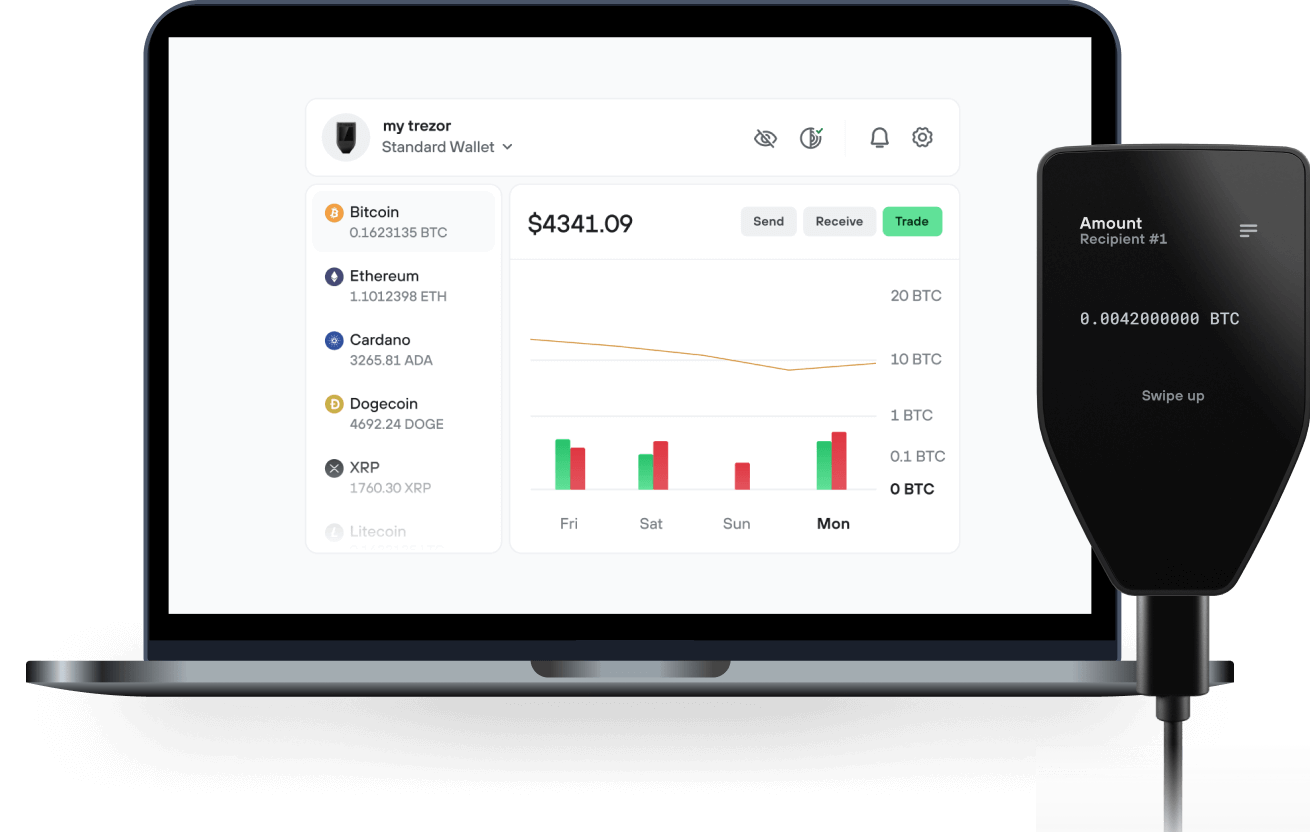
收发您的 REL 通过 Trezor Suite 应用

收发
支持 REL 的 Trezor 硬件钱包
让您的 Trezor 同步至钱包应用
通过将 Trezor 硬件钱包与多个钱包应用同步,管理您的 REL。
Trezor Suite
Backpack
NuFi
支持的REL网络
为什么要用硬件钱包?

离线安全保护,尽在 Trezor
- 您 100% 拥有您的加密货币
- 离线保护私钥,大幅降低在线攻击风险
- 您的数据 100% 匿名
- 您的加密货币不受任何公司控制
在线交易所
- 若交易所出现问题,您将失去加密货币
- 交易所是黑客攻击的目标
- 您的个人数据可能会被暴露
- 您并不真正拥有您的加密货币
如何在 Trezor 上使用REL
请连接您的 Trezor 设备
打开第三方钱包应用
管理您的资产
充分利用您的 REL
Trezor 助您安心管理 REL
 受安全芯片保护
对抗在线与离线威胁的可靠防线
 您的代币,您做主
通过设备确认,全面掌控每笔交易
 安全始于开源
透明钱包设计让您的 Trezor 更优更安全
 清晰简单的钱包备份
借助新一代备份标准恢复数字资产
 从第一天起就信心十足
包装与设备防拆封条共同保障 Trezor 设备完整性
REL is a production-grade infrastructure platform that enables per-request payments for APIs through the x402 protocol, an HTTP extension that embeds payment handling directly into web requests. Acting as a reverse proxy, REL verifies payments on-chain before forwarding calls to the target API. This allows any provider to charge for access dynamically, without relying on centralized billing systems, subscription models, or external gateways.
The system was designed to integrate with existing APIs effortlessly. Developers upload an OpenAPI specification, define pricing per endpoint, and immediately enable usage-based monetization. REL handles all routing, payment validation, metering, and error management automatically, maintaining standard HTTP behavior for clients and compatibility with existing development workflows and tools.
Technically, the platform focuses on latency under 300 ms, reliability, and full protocol compatibility. It doesn’t alter the underlying business logic of APIs; it simply adds a verified payment layer that operates transparently. The infrastructure supports both individual developers and large organizations seeking transparent, usage-driven billing while retaining full control over their backend, data, and deployment environment.
REL’s architecture is stateless, deterministic, and designed for scalability, meaning payments and requests are processed independently without maintaining session state. This makes it suitable for high-throughput systems, enterprise data services, API marketplaces, and AI agents requiring precise, per-call payments. Its purpose is purely functional: to provide a stable, efficient bridge between established HTTP standards and on-chain transaction logic, without friction, unnecessary abstraction, or deviation from standard web infrastructure practices.