安心・安全なGeneral Impressionsウォレット
Trezorエコシステムで、General Impressions資産を完全に安心して管理できます。
- ハードウェア・ウォレットで保護
- 互換性のあるホットウォレットと使う
- 200万人以上のお客様に信頼されています
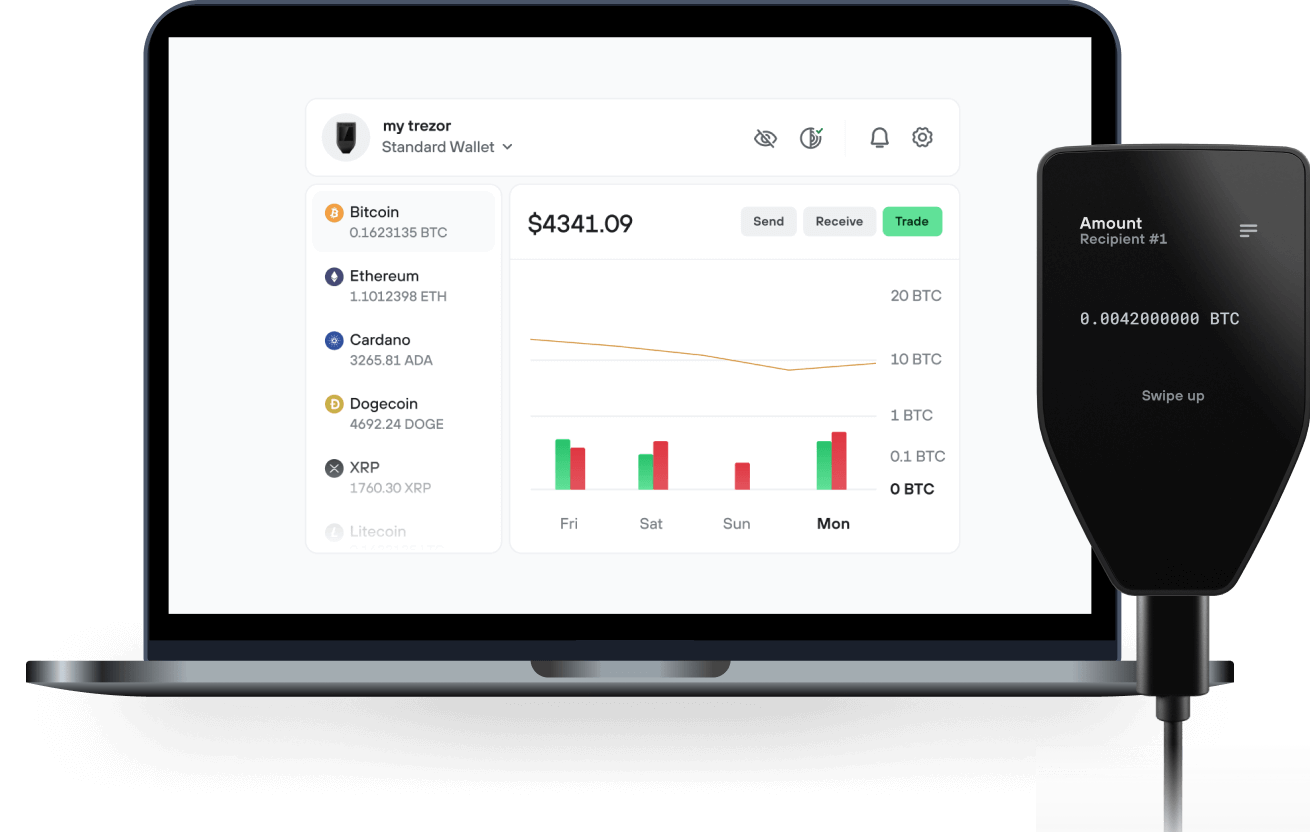
General ImpressionsをTrezor Suiteアプリでで送信、受信

送信&受信
General ImpressionsをサポートするTrezorハードウェア・ウォレット
Trezorをウォレットアプリと同期
General Impressionsを、複数のウォレットアプリと同期させたTrezorハードウェア・ウォレットで管理しましょう。
Trezor Suite
Backpack
NuFi
対応 General Impressions ネットワーク
なぜハードウェア・ウォレットを使うのですか?
Trezorでオフライン管理
- コインは100%あなたのものです
- あなたのウォレットはオフラインで100%安全です
- お客様のデータは100%匿名です
- あなたのコインはどの会社にも紐付いていません
オンライン取引所
- 取引所が破綻すると、コインを失うことになります
- 取引所はハッカーの標的
- あなたの個人データが漏洩する可能性があります
- コインを、あなたはまだ完全に自分のものにしていません。
TrezorでGENを使う方法
Trezorを接続
サードパーティ製のウォレットアプリを開く
資産を管理しましょう
お手持ちのGENを最大限に活用しよう
TrezorはあなたのGENを安全に保護します
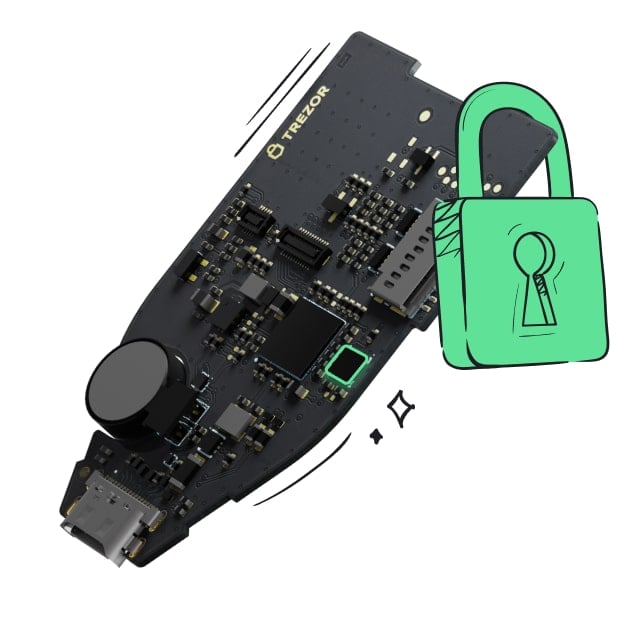 セキュア・エレメントにより保護されています
オンラインとオフライン、両方の脅威に対する最強の防御
 あなたのトークン、あなたの管理
デバイス上での承認により、すべてのトランザクションを完全に制御
 セキュリティシールが、梱包やTrezorハードウェア・ウォレットに改ざんがないことを保証します。
透明なウォレットデザインが、あなたのTrezorをより優れた、より安全なものにします。
 シンプルでわかりやすいウォレット・バックアップ
新しいバックアップ規格でデジタル資産へのアクセスを取り戻しましょう
 初日からの安心を
パッケージとデバイスのセキュリティ・シールでTrezorの完全性を守ります
General Impressions (GI) is a decentralized execution framework designed to support the emergence of Agentic AI—systems composed of autonomous software agents that can persist over time, coordinate with other agents, and adapt their behavior as they learn. Unlike traditional AI tools such as Manus, which executes discrete tasks without memory, or n8n, which automates workflows through static rule-based logic, GI provides a fully programmable runtime for long-lived, composable, and self-evolving agents. It does this through Glint, an open-source engine written in Rust, where agents are not stateless scripts but autonomous processes capable of maintaining state onchain, coordinating with other agents via native protocols, and dynamically updating their logic mid-execution. This enables a new kind of software behavior: not one-off responses, but ongoing loops of perception, memory, reasoning, and action—functionally similar to operating systems for agents.
Rust plays a central role in GI’s design. The language’s memory safety guarantees, concurrency model, and strict lifecycle control provide the stability and performance necessary for running agents over long time horizons. GI’s architecture embraces modularity at its core: agent logic is structured as a graph, where nodes represent functional modules and edges encode control and data flows. These modules are designed to be reused and recombined, allowing developers to build complex systems from simple, interoperable components. This makes GI fundamentally different from orchestration frameworks like LangChain or AutoGen, which focus on chaining prompts or managing tools, but lack persistence, runtime coordination, or any notion of lifecycle-aware agents.
What distinguishes GI is its ability to solve the “agentic trilemma”—the challenge of building agents that are at once flexible, general-purpose, and reusable. In legacy systems, agents either reset between runs (as with Manus), or rely on external, human-managed logic (as with n8n). In GI, agents can learn and change, coordinate natively, and persist their knowledge across context switches. These capabilities are not theoretical; GI has validated them in production through its Telegram Swarm, a network of agents operating across over 330,000 Telegram groups. These agents continuously scan messages, classify sentiment, track influencer dynamics, and autonomously take actions such as posting or triggering downstream systems—demonstrating the scalability and effectiveness of GI’s runtime.
More broadly, GI addresses a critical missing layer in the AI and crypto ecosystem. While many current projects focus on agent frontends, tooling layers, or token marketplaces, GI focuses on execution—the substrate on which all agent behavior runs. Just as Ethereum became the default environment for decentralized applications by solving composable, trustless execution for contracts, GI aspires to be the default runtime for autonomous agents. It is designed for a world in which software agents will increasingly operate without constant human supervision—researching, trading, moderating, governing, and negotiating in dynamic environments. In that world, the ability to persist, coordinate, and evolve will no longer be optional; it will be foundational. GI is building the infrastructure for that world.