Upozorňujeme, že naše blogové články jsou momentálně dostupné pouze v angličtině.
Bitcoin and Censorship Resistance: What does it mean for you?

Bitcoin lets you take full control of your money, protecting it from government censorship and financial restrictions. By keeping your keys secure in a hardware wallet, you can move and access your funds anywhere, ensuring your ownership and financial freedom even under oppressive regimes.
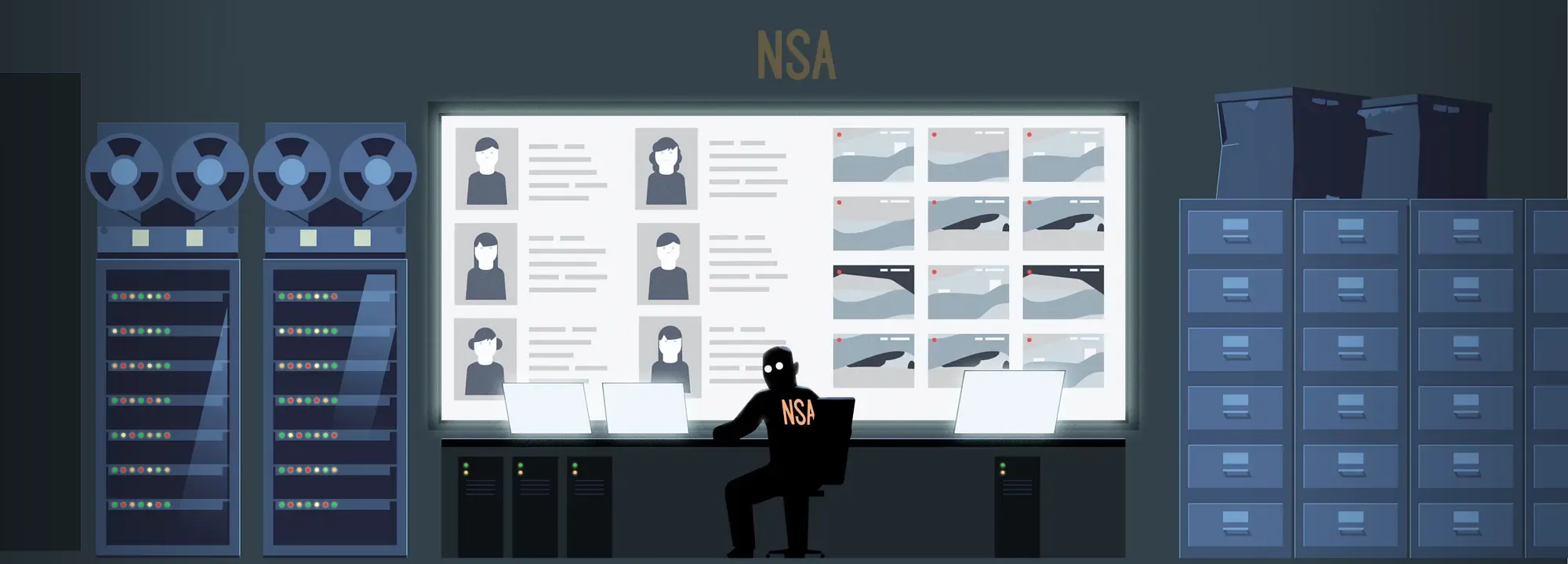
Censorship has been a means to control society since ancient times, shaping the thoughts of entire populations by removing references to any ideas not aligned with the state’s. It is a tool much more effective than simply enforcing laws, as it can prevent discontentment by restricting the population’s free thought and free speech through bureaucracy alone.
We commonly understand censorship as black bars spotting the pages of sensitive government documents, but it can be much more sinister. Censorship manifests in the silencing of whistleblowers and free-thinkers, and in the power of the government to remove your access to financial resources. It is a tool that can outcast an individual from society and leave them without means to survive. Bitcoin offers a lifeline to those whose rights to freedom of expression and finance are at risk; Bitcoin is money for when lives depend on it.
What Bitcoin does for Liberty
It is no secret that countries with state-mandated surveillance infringe on human rights. Those fleeing a despotic regime can suddenly find themselves cut off from the society they have been dependent on for most, if not all, of their life. Any assets in the country’s bank accounts can be frozen overnight, leaving them unable to access the funds needed to escape or survive. This is a very real threat faced by many millions of people in countries where censorship is a societal norm.
When a dictatorship is established, censorship is used as a tool to prevent rebellion, woven through all parts of everyday life: news, internet access, education, even healthcare can be subject to censorship in one form or another. Developed countries also see censorship on a regular basis, with books continuing to be banned for their content and with the state able to restrict you from using your money for something that it doesn’t agree with.
Bitcoin detaches your wealth from the state’s monetary framework, liberating it. Among other benefits, this means that only you have the authority to say how your money will be used. Even within a heavily surveilled society, Bitcoin makes it very hard to prove who sent money to whom. If a member of your social circle is labeled a troublemaker or enemy of the state, you can be targeted as an associate and face having your assets seized. Not only can ownership of your bitcoins not be revoked, but it can help obscure the source of any support you provide or are provided with as you face persecution.
How Bitcoin resists censorship
When a Bitcoin transaction is broadcast, everyone on the network must agree that it is an allowable transaction. This means that each node which receives the broadcast will check that the sending wallet has enough funds to pay. Other aspects, such as your identity or beliefs, are not part of the criteria. All addresses are treated equally as long as they follow the rules of the network.
There should be no authority in Bitcoin with the means to freeze your funds. In a number of cases where hackers stole cryptocurrencies, exchanges stepped in to prevent those funds from being sold or withdrawn. This may seem like a case of censorship, but was only possible as the coins were technically in the exchange’s own wallet, making them the real owners. As soon as funds leave your wallet, they are no longer under your control. Any exchange can freeze assets you send to them without stating a reason, and a web wallet can be easily compromised by phishing or malware so you should always keep your bitcoin on a hardware wallet.
Censorship by a government is not realistic given the state of the network today. It would be incredibly difficult and expensive for any one regime to take control, due to Bitcoin’s distributed nature. Therefore, any legitimate transaction will be processed no matter who opposes it, as long as it can reach the network; China’s “great firewall”, for example, could potentially block transactions from communicating with outside networks, but there exist ways around this.
Ownership is a Human Right
Security is greatest when it’s trustless and transparent. Banks’ security is based on trusting their processes, their staff and their hidden, bombproof vaults. Each of these is a potential point of failure, yet we blindly trust them with our money because it is the common thing to do and it is convenient. When we pay with a debit card, an agreement is made between banks that you have spent some of your money and someone else has received it. It is a quick process because it is based on trust; creating an instantaneous system where funds would actually be moved from one vault to another, anywhere in the world, is impossible.
In fiat currencies, high transfer speeds are an illusion based on a huge degree of trust. Behind the scenes, transactions can sit in a clearing house for days. The ten minutes it takes for a Bitcoin block to be mined is the result of a system that eradicates trust entirely, ensuring that no individual can prevent you from sending your money wherever you want, and allowing you to finalize a transaction in minutes. If you are not in a rush, you can set a fee as low as 1 satoshi per byte and your transaction will still be processed, just as securely, but may take a long time to settle. Conversely, you can opt for the convenience of a 10-minute transfer, but it will cost you a higher fee. Ownership is a human right and Bitcoin prioritizes that right over convenience, while fiat currencies and banks willingly rescind it.
Not only can you prove complete ownership of your bitcoins, but you can do so without connecting your identity to them. You can move them as you see fit, should you need to get funding in or out of a country under embargo by your government. Even if you need to flee, your seed words are all you need to bring your finances with you and establish a new life. There has never been a currency as well-equipped to resist tyranny as Bitcoin is.
Tyranny-resistant Money
Bitcoin is only censorship-resistant to a degree. There are ways in which it can be censored, as explored in the 2018 paper, “The Looming Threat of China: An Analysis of Chinese Influence on Bitcoin”. Here, four censorship-based attacks are listed, where China’s dominance in mining could theoretically lead to a move by the state to blacklist or swarm particular addresses in a way that prevents the network from interacting with them, or the great firewall could be employed to prevent transactions from coming into or leaving China.
Ultimately, it comes down to a choice — whether you want to remain bound to the will of a government whom you may not have even elected, or whether you want to reclaim indisputable, uncensorable ownership of your assets, in case the day ever comes when your rights are stripped from you.
Across the globe, governments continue to introduce policies that restrict individual will and rights to ownership, and national currencies are beginning to collapse. Bitcoin offers much more than a trading opportunity, it is a tool for emancipation. Keep your keys secured and wherever you take your Trezor, you will always have access to your rightful property.