Portefeuille sûr et sécurisé Agent USD
Prenez le contrôle de vos Agent USD actifs en toute confiance dans l’écosystème Trezor.
- Sécurisé par votre portefeuille matériel
- Utiliser avec des hot wallets compatibles
- Adopté par plus de 2 millions de clients
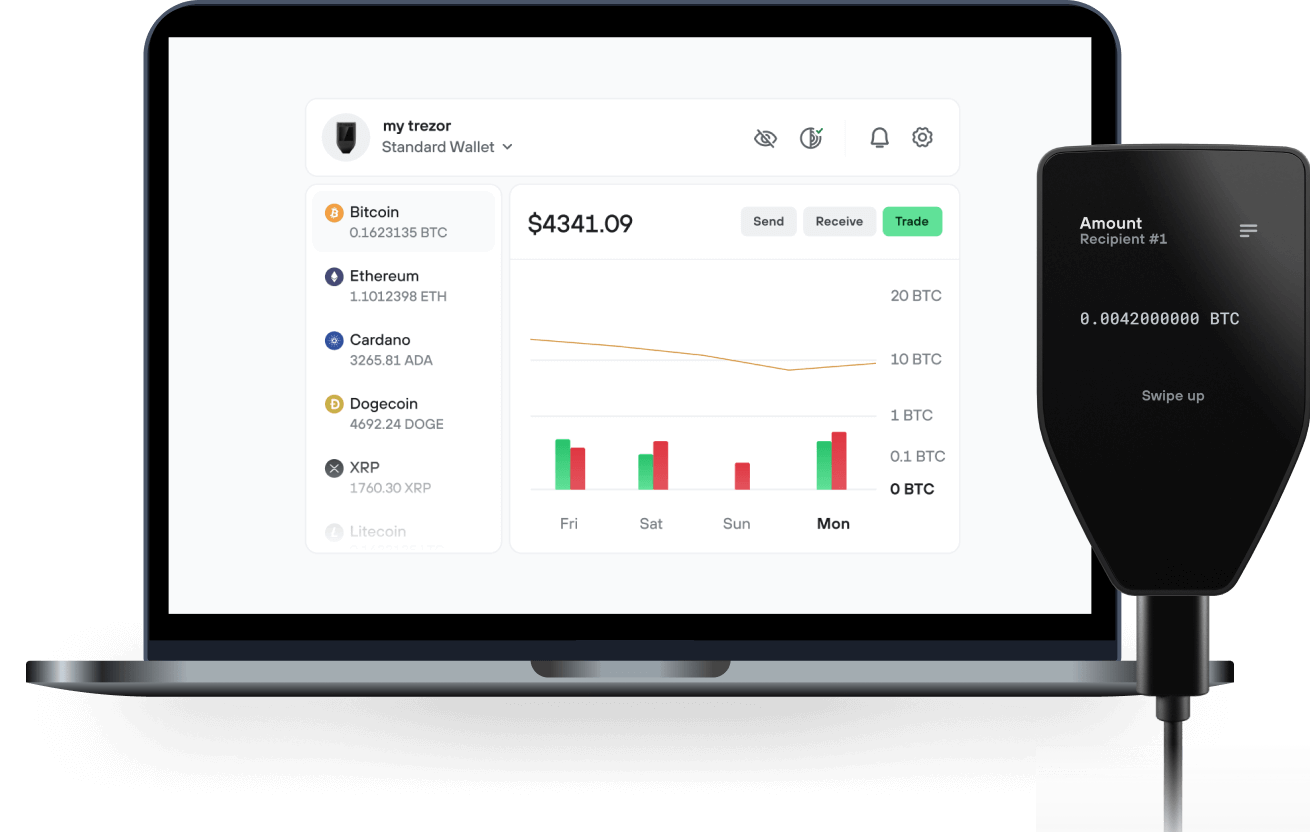
Envoyez et recevez vos Agent USD avec l'application Trezor Suite

Envoyer et recevoir
Portefeuilles matériels Trezor qui supportent Agent USD
Synchronisez votre Trezor avec des applications de portefeuille
Gérez vos Agent USD avec votre portefeuille matériel Trezor synchronisé avec plusieurs applications de portefeuilles.
Trezor Suite
MetaMask
Rabby
Agent USD Réseau supporté
Pourquoi un portefeuille matériel ?

Allez hors ligne avec Trezor
- Vous possédez 100% de vos cryptos
- Votre portefeuille est 100% sécurisé hors ligne
- Vos données sont 100 % anonymes
- Vos cryptos ne dépendent d’aucune entreprise
Échanges en ligne
- Si un échange échoue, vous perdez vos cryptos
- Les échanges sont des cibles pour les pirates
- Vos données personnelles peuvent être exposées
- Vous ne possédez pas réellement vos cryptos
Comment utiliser AUSD sur Trezor
Connectez votre Trezor
Ouvrez une application de portefeuille tierce
Gérez vos actifs
Profitez pleinement de votre AUSD
Trezor garde vos AUSD en sécurité
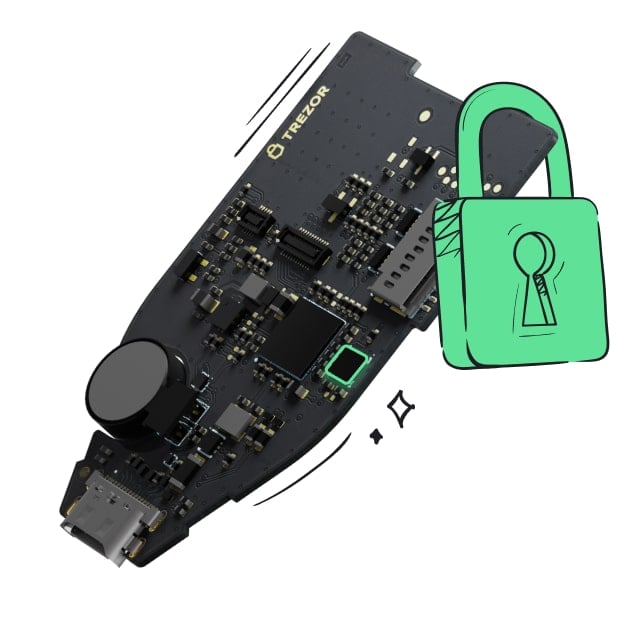 Protégé par Élément Sécurisé
La meilleure défense contre les menaces en ligne et hors ligne
 Vos jetons, votre contrôle
Contrôle absolu de chaque transaction avec confirmation sur l'appareil
 La sécurité commence par l'open source
Le design de portefeuille transparent rend votre Trezor meilleur et plus sûr
 Sauvegarde de portefeuille claire et simple
Récupérez l’accès à vos actifs digitaux avec un nouveau standard de sauvegarde
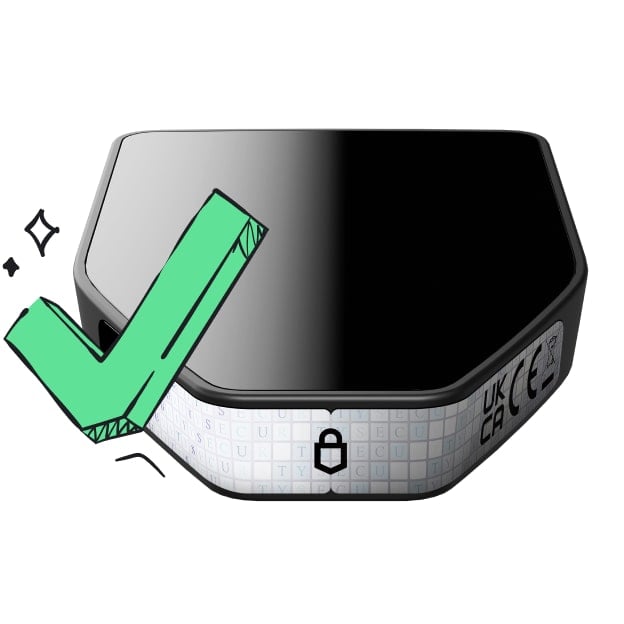 Confiance depuis le premier jour
Les sceaux de sécurité sur l’emballage et l’appareil protègent l’intégrité de votre Trezor
Revolutionizing the Machine Economy: A Multi-Chain USD Standard for AI Agents In the rapidly evolving landscape of the autonomous web, traditional financial systems act as a bottleneck for machine-to-machine interactions. While humans can navigate credit card forms and subscription paywalls, AI agents require a frictionless, programmatic way to exchange value. Enter the x402-compatible Multi-Chain USD, a stablecoin infrastructure specifically architected to serve as the native currency of the agentic economy.
The Architecture of Autonomous Payments At its core, this project leverages the x402 protocol—an internet-native payment standard that revives the dormant HTTP 402 "Payment Required" status code. By embedding payment instructions directly into the HTTP header, the project allows AI agents to discover, negotiate, and settle transactions without the need for manual API keys, user accounts, or centralized intermediaries.
This USD standard is inherently multi-chain, ensuring that agents can operate across diverse ecosystems like Solana, Base, and Ethereum while maintaining a stable unit of account. This interoperability prevents liquidity fragmentation, allowing an agent on one chain to pay for services hosted on another with sub-second finality.
Key Innovation: Prediction & Agent-to-Agent Pay The true power of this USD standard lies in its specialized payment modules designed for complex AI workflows:
Prediction Pay: Machine learning models and prediction markets require high-frequency, low-latency settlement. This standard supports "Pay-per-Prediction" models, where an agent pays exactly for the inference or data point it receives. This eliminates the "over-provisioning" waste of traditional monthly subscriptions.
Agent-to-Agent (A2A) Pay: As AI becomes more specialized, complex tasks are broken down into sub-tasks handled by different agents. Our USD facilitates a "cascading payment" system. For example, a "Research Agent" can autonomously hire a "Translation Agent" and a "Data Extraction Agent," settling micro-debts in real-time as the workflow progresses.
Programmable Escrow: Transactions can be gated by smart contract conditions, ensuring that funds are only released when a verifiable output (like a valid JSON response or a signed proof of computation) is delivered.