Billetera Cardstack segura y protegida
Toma el control de tus Cardstack activos con total confianza en el ecosistema de Trezor.
- Protegido por tu billetera física
- Usa con billeteras digitales compatibles
- Con la confianza de más de 2 millones de clientes
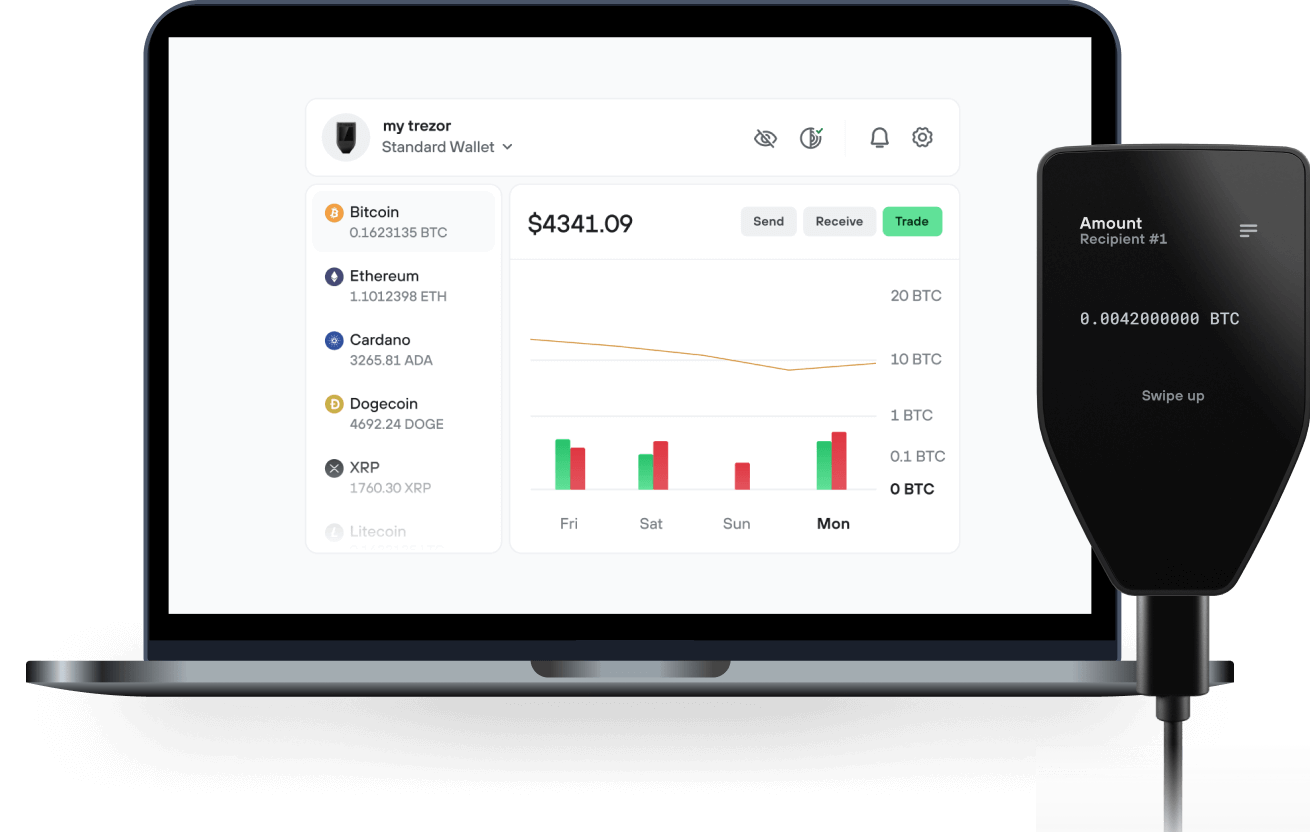
Envía y recibe tu Cardstack con la app Trezor Suite

Enviar y recibir

Intercambiar
Billeteras físicas Trezor compatibles con Cardstack
Sincroniza tu Trezor con apps de billeteras
Gestiona tus Cardstack con tu billetera física Trezor sincronizada con apps de billeteras.
Trezor Suite
MetaMask
Rabby
Red Cardstack Compatible
¿Por qué una billetera física?

Desconéctate con Trezor
- Tus monedas son 100% tuyas
- Tu billetera está 100% segura offline
- Tus datos son 100% anónimos
- Tus monedas no están atadas a una compañía
Exchanges en línea
- Si un exchange falla, pierdes tus monedas
- Los exchanges son blanco de los hackers
- Tu información personal puede ser expuesta
- Tus monedas no son realmente tuyas
¿Cómo usar CARD en Trezor?
Conectar tu Trezor
Instala la app Trezor Suite
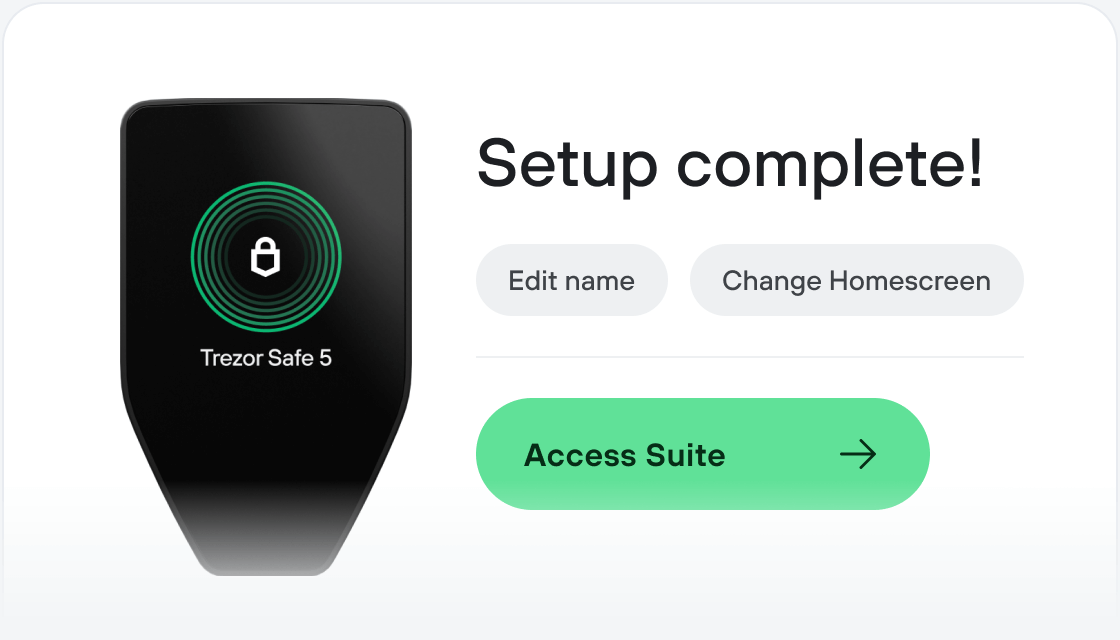
Transfiere tus CARD
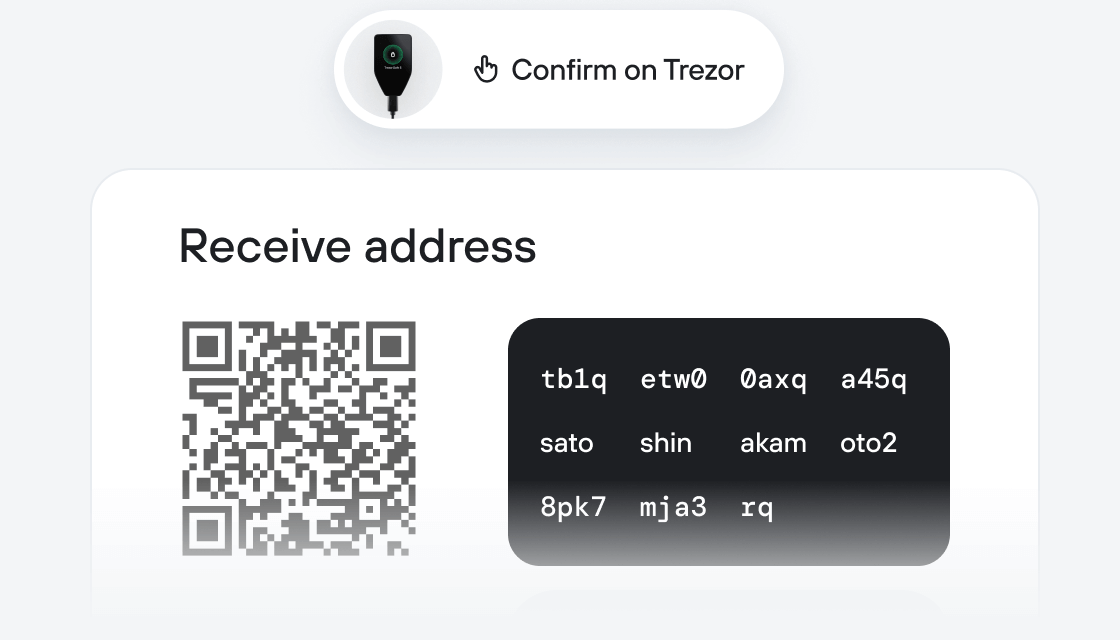
Aprovecha al máximo tus CARD
Trezor mantiene tus CARD seguros
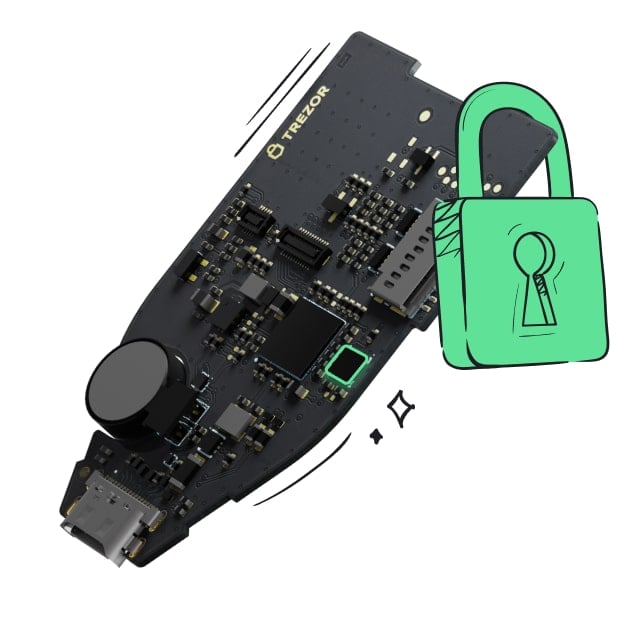 Protegido por Elemento Seguro
La mejor defensa contra amenazas tanto online como offline
 Tus tokens, bajo tu control
Control absoluto de cada transacción con confirmación directa en el dispositivo
 La seguridad empieza por código abierto
Un diseño de billetera de forma transparente hace que tu Trezor sea más seguro y confiable
 Copia de seguridad de billetera clara y sencilla
Recupera el acceso a tus activos digitales con nuevo estándar de copia de seguridad
 Confianza desde el primer día
El embalaje y los sellos de seguridad del dispositivo protegen la integridad de tu Trezor
Cardstack is an open-source framework and consensus protocol that makes blockchains usable and scalable for the mass market, creating a decentralized software ecosystem that can challenge today’s digital superpowers. Cardstack Token (CARD) is a utility token allowing end- users and businesses to use applications that interact with multiple blockchains, decentralized protocols, app-coin-backed dApps, and cloud- based services while paying a single on-chain transaction fee.
The main value proposition of the Cardstack ICO is to breakdown the user experience of disparate software, cloud and blockchain silos which now exist on various levels of the digital world, allowing both developers and users to engage in customizable workflows. To overcome these disparate app silos, Cardstack offers a new UI, deployed via the web or as a peer-to-peer app, which turns each service created by open-source developers into a “card”. Each card comprises a visual embodiment of key information, whereby users can then connect related cards for any type of workflow or utility they desire. These cards are the point of interaction between local services, cloud-based services and blockchain services all on one interface called Cardstack Hub. Underlying the Cardstack ecosystem is the Cardstack Token (CARD), an Ethereum-based ERC20 token.
The Cardstack Team comprises many open source contributors. Check out the full list of contributors here. Heading the development of Cardstack is Christopher Tse. Christopher holds a BSc in Computer Science from Columbia University and is the Co-Founder of Monegraph and dotBlockchain Media. He has also served as Senior Director of Innovation at Businessweek. Ed Faulkner is the Lead Developer at Cardstack. He holds a Master of Engineering in Electrical Engineering and Computer Science from MIT. He has founded three of his own tech ventures of which all are currently operational. Hassan Abdel-Rahman is the Lead Blockchain Developer for Cardstack. He holds a BSc in Computer Science and Mathematics from Colorado School of Mines. Previous roles include over 2 years as Senior Software Designer at Monegraph and Principal Engineer at McGraw-Hill Education.
One of the most important features Cardstack will deploy is an entry channel payment system that does not require users to purchase cryptocurrency from an exchange. Users can simply pay with fiat, such as a credit card, to purchase CARD tokens directly on the platform, bypassing the need for any prior familiarity with crypto. Once users purchase CARD tokens, they are stored on a native wallet accessible from the Cardstack Hub. CARD tokens held in the native wallet are then used to purchase SSCs for every app and service they users with to access. To make any project appealing to the mass consumer market, this type of simplified entry into the cryptospace is a necessity. Cardstack have made some progress on the development front. The code for over 30 initial modules on the Cardstack platform has been made available via their Github. Also, the Solidity code for the Scalable Payment Pool has already been open-sourced. The Scalability Payment Pool is one of the core back-end mechanisms of the platform that issues rewards to developers for their work.
Cardstack aims to create an economically-sustainable software ecosystem that avoids the problems of today’s centralized platforms. It’s an “experience layer” for the decentralized internet of the future, allowing users to combine services across cloud apps and decentralized apps. The ecosystem revolves around the use of Cardstack tokens, or CARD.