Importante: los artículos de nuestro blog de momento solo están disponibles en inglés.
From 6,000 BC to 21,000,000 BTC, Part III: From gold to silver, copper, and paper
The debasement and inflation of Roman currencies described in the previous article of the series From 6,000 BC to 21,000,000 BTC peaked during the Crisis of the Third Century, which nearly collapsed the Roman Empire. The real consequences of the absurd monetary policies of several Roman emperors took years to materialize.
What Emperors saw as an opportunity to produce new money, citizens saw as a transfer of wealth out of their hands. Low-quality coins with low precious metal content flooded the regions of the Roman Empire, and the price of goods and services skyrocketed. Soldiers and workers demanded to be paid more. With no areas left to plunder the precious metals from, the Roman Empire hit rock bottom.
The uncontrolled debasement and inflation had consequences reaching further than any of them could have ever imagined.
Hyperinflation caused by the uncontrolled minting of worthless money, and ever-increasing taxes caused by government spending hurt the Roman trading and banking sector and brought one of the most powerful empires in history to its knees. Despite Diocletian’s efforts to heal the Roman monetary system, the financial market of the Roman Empire never recovered the prosperity and stability observed during the Pax Romana (“Roman peace”) period. The fall of the Western Roman Empire was irrepressible.
“Do not blame Caesar, blame the people of Rome who have so enthusiastically acclaimed and adored him and rejoiced in their loss of freedom, and danced in his path and gave him triumphal processions. Blame the people who hail him when he speaks in the Forum of the ‘new, wonderful good society’ which shall now be Rome, interpreted to mean ‘more money, more ease, more security, more living fatly at the expense of the industrious.” — Marcus Tullius Cicero
Money as a vital part of every empire
The period following the Crisis of the Third Century played an essential role in shaping the future face of the Roman Empire and the majority of Europe. Diocletian’s successor Constantine the Great, who reigned from 306 to 337, was the first Roman emperor who converted to Christianity, and apart from his religious, administrative, and social reforms, he also continued to drive the adoption of solidus.
A coin initially introduced by Diocletian in 301 AD intended to replace the aureus, wasn’t your everyday currency. In the form struck during Constatine’s rule, it was 4.5 grams of gold. The value of one solidus was equal to 275,00 denarii, which at this time carried only 5% of the original silver content.
During the fourth century, the Roman Empire started minting thin silver coins called siliquae, and even smaller bronze coins called folles. One solidus was equal to 24 siliquae, or 180 bronze folles. Together with solidus, these were the first coins of the Roman Empire to depict Christian imagery and texts.
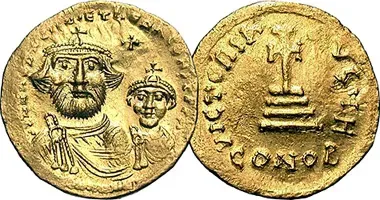
Thanks to strict monetary policies preventing debasement and alteration, the solidus became the preferred currency of merchants. It remained the main currency of the Roman Empire and a majority of Western Europe until the late 8th century when it was largely replaced by the financial reforms of the King of the Franks, Pepin the Short. Solidii remained an accepted form of payment in the Roman part of Europe until the early 10th century when it was commonly known as a nomisma rather than a solidus.
The money of the Dark Ages
The Dark Ages represent the period between the beginning of the fall of the Western Roman Empire and the beginning of the Age of Exploration. This name was used for the first time by an Italian scholar, Francesco Petrarch, who lived from 1304 to 1374. He called it the Dark Ages due to the lack of high-quality Latin literature, but the description was later expanded to also include other areas.
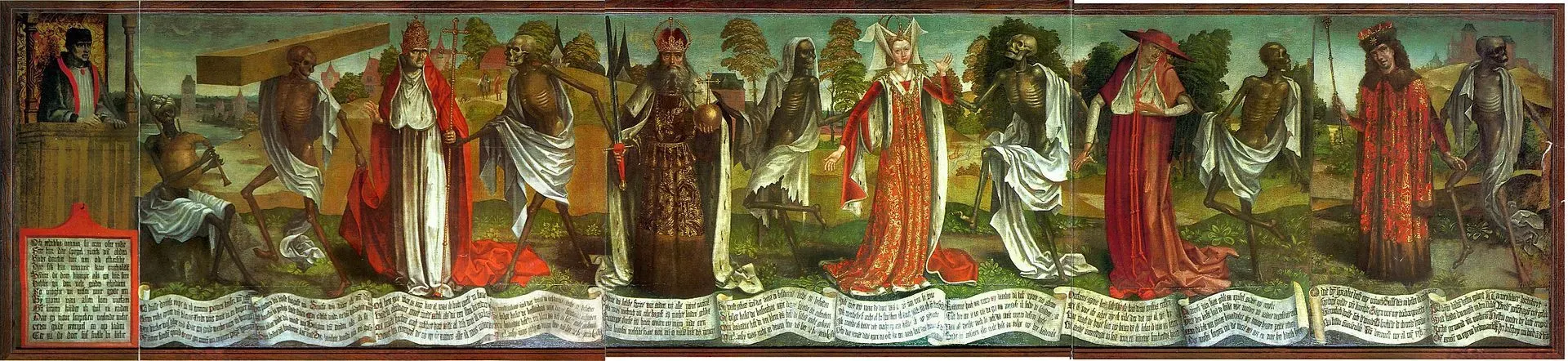
The Dark Ages were also marked by the early European feudalism, which provided the lower class of society with only a few opportunities to improve their social standing. In addition to this, almost the whole continent of Europe was under the control of the Christian Church, which was extremely hostile towards the cultural and scientific progress pioneered by the Romans. The late Dark Ages were marked by the Black Death, bubonic plague, which is estimated to have killed between 40% to 60% of Europe’s population. The Dark Ages indeed…
Roman coins from the Dark Ages were already a primitive form of fiat or fiduciary money. Counting coins instead of weighing them was a common practice during the Roman Empire. This meant that the face value of a coin was more important than the value represented by the materials (gold, silver, bronze) used to mint the coins.
Rome had no central banking system, and the banking regulations were minimal. The banks of the Roman Empire were also allowed to keep less in reserves than the full total of deposits. This practice is today known as fractional-reserve banking, and it enables the banks to borrow more money than they actually have in reserves. Banks can “print” more money than they hold which creates a risk of eventually being unable to pay their clients’ deposits if a withdrawal is requested.
Later Roman coins were easily distinguishable by their unified “design.” The front page of these coins carried an image of the reigning emperor together with his name and honorary titles, while the reverse was usually depicting Roman virtues and symbolism. Almost all of the coins produced during the Early Middle Ages, regardless of the region, carried the imagery of reigning authority combined with some religious or traditional symbolism. The custom of depicting famous and influential people on our currencies remains in place to this day as observable on US dollars or Chinese yuan.
During this period, Europe was divided into two monetary zones — the rich Western and Southern zone in which coins were minted and circulated as a vital part of the economy, and the Eastern and Northern zone, which had no coins of its own. All of the circulating coins in this region were just sporadically imported as a result of trading between the two areas. It wasn’t until the late 9th and early 10th centuries when these regions started to mint their own coins required to monetize the economy.
Early coins of Western Europe
Some of the oldest coins of the Early Middle Ages found in Europe that do not belong to Roman coinage are the ones minted by early Germanic, Frank, and Visigothic rulers. Most of the coins made between the fifth and seventh centuries were made of pure gold and thus unsuitable for everyday use in the retail economy.
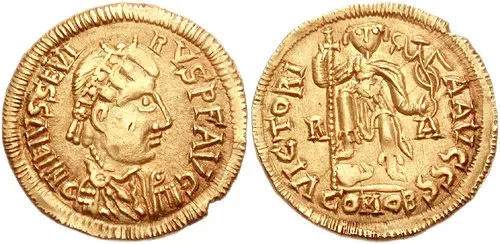
However, this changed as the previously centrally-controlled regions split into smaller parts, and local rulers came to power. Decentralized and locally-operated mints started appearing over Europe, mainly Francia, and little mints started producing rare silver and copper coins primarily used as a tax payment.
The discoveries of golden Byzantine solidi, which were still in circulation and minted in the Eastern Roman Empire (Byzantine Empire), indicate that trading between the early European kingdoms and old empires of the East and South occurred regularly. Some of the golden solidi of the Byzantine Empire was even discovered as far away as Frisia (modern-day Netherlands).
The demise of gold as a currency
The medieval period in Europe was marked by shortages of precious metals, specifically gold. This was, to some extent, caused by the invasions of the Magyars from the East, Vikings from the North, and Muslims from the South. Gold was becoming rarer and more difficult to mine compared to silver.
Anglo-Saxon England and Merovingian Francia switched from gold to silver in the early 8th century, and the rest of the continent followed, with the last pure-gold coins being minted in the region of Benevento in the ninth century. From this part of history onwards, there were no more gold coins used as a regular national currency.
This progress was mainly driven by the King of the Franks, Pepin the Short, who introduced several reforms, including a financial reform introducing a new currency called French denier — a penny. Pepin standardized the coinage, its denominations, and created new monetary rules. The Anglo-Saxon kingdoms followed the Franks and quickly adopted these new small, silver-based coins. At this time in history, almost all coins carried a face value, with only a tiny portion of its value being represented by the materials used to mint the coin. I.e., The silver used to mint one penny coin was worth much less than the same penny coin.
Our society slowly started to abandon “good money” in the form of gold which naturally carried highly-appreciated characteristics such as aesthetics, corrosion resistance, resistance to oxidation, but most importantly, its scarcity. Silver or copper are not even remotely as scarce as gold, and they also do not carry the same chemical and physical properties which make gold so valuable.
The Islamic golden age
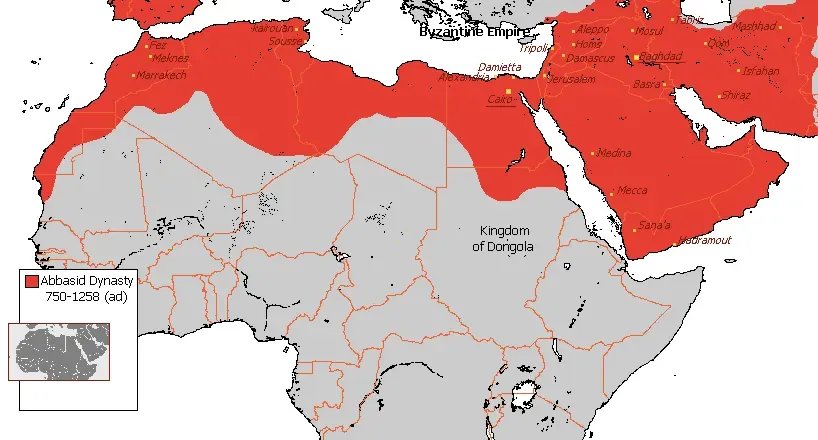
As Europe was slowly recovering and new kingdoms were forming, a new world power arose in the East. The third Islamic Caliphate led by Harun al-Rashid (786 to 809) was entering the Islamic golden age. A period of intense economic, military, and cultural growth demanded that new methods of payment be created. Money that wasn’t merely a method of tax payment or means of exchange.
The Caliphate developed many concepts and principles of money and economics that we use even today. Many of these concepts, such as riba (usury, charging interest) and zakat (tax-like obligement used to help the needy), are very closely tied to the religious beliefs and principles of Islam.
The Islamic Caliphate had a far-reaching trading network extending from the Atlantic Ocean as far as the South China Sea. The main currency of the Caliphate was a silver Dirham coin, often used in the exchange of goods and slaves. The Dirham, just like the other coins, was regularly hoarded in an effort to protect one’s wealth and influence.
The first experiments with paper money
While the rest of the world was still just learning how to create and use money, the Chinese were already using leather promissory notes as early as 118 BC. Still, they were very impractical and unusable in everyday life. A promissory note is a document carrying a specific promise to pay along with the steps and timeline required to fulfill the payment promise.
For the first time in history, paper appeared in some form of money during the Tang and Song dynasties between the years 618 and 907. The “flying cash” was a paper document recording a deposit of cash, invented by merchants, and adopted by the government. The central government quickly discovered the advantages of paper money and developed a money issuing monopoly.
The government allowed only specific deposit shops to issue “receipts of strings of cash.” The cash coins which we talked about in the second part of our series were made of copper. They were heavy, and transporting them required a lot of effort. The issuance of “cash receipts” allowed merchants and traders to store their strings of cash at a deposit shop, which issued them with a receipt representing the value of the deposited money. This enabled long-distance transfers of money, thus the nickname “flying cash.”
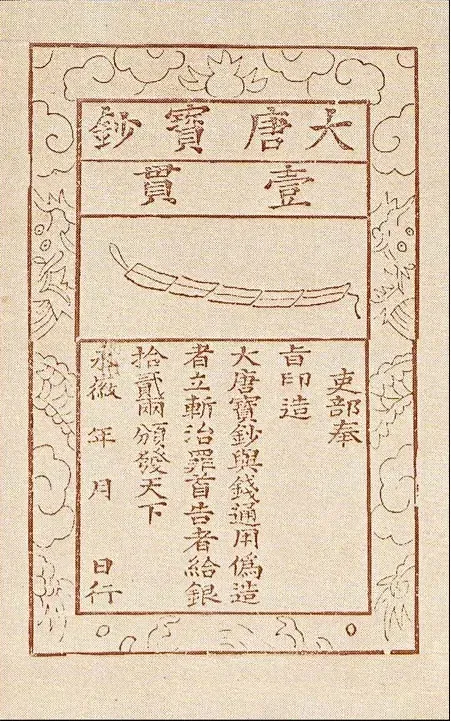
However, these were still not paper banknotes, which we know and use today. Flying cash was only a receipt confirming that its holder possesses a specific amount of cash coins that are deposited at a deposit shop. Promissory notes never replaced coins and were used side by side.
The first paper banknotes didn’t appear in China until the late 12th century, and in Europe even later, thanks to explorers such as Marco Polo, but let’s keep that for the next part.
End of Part III.