Carteira NodeAI segura & protegida
Assuma o controle dos seus NodeAI ativos com completa confiança no ecossistema Trezor.
- Protegido por sua carteira de hardware
- Use com carteiras quentes compatíveis
- Confiança de mais de 2 milhões de clientes
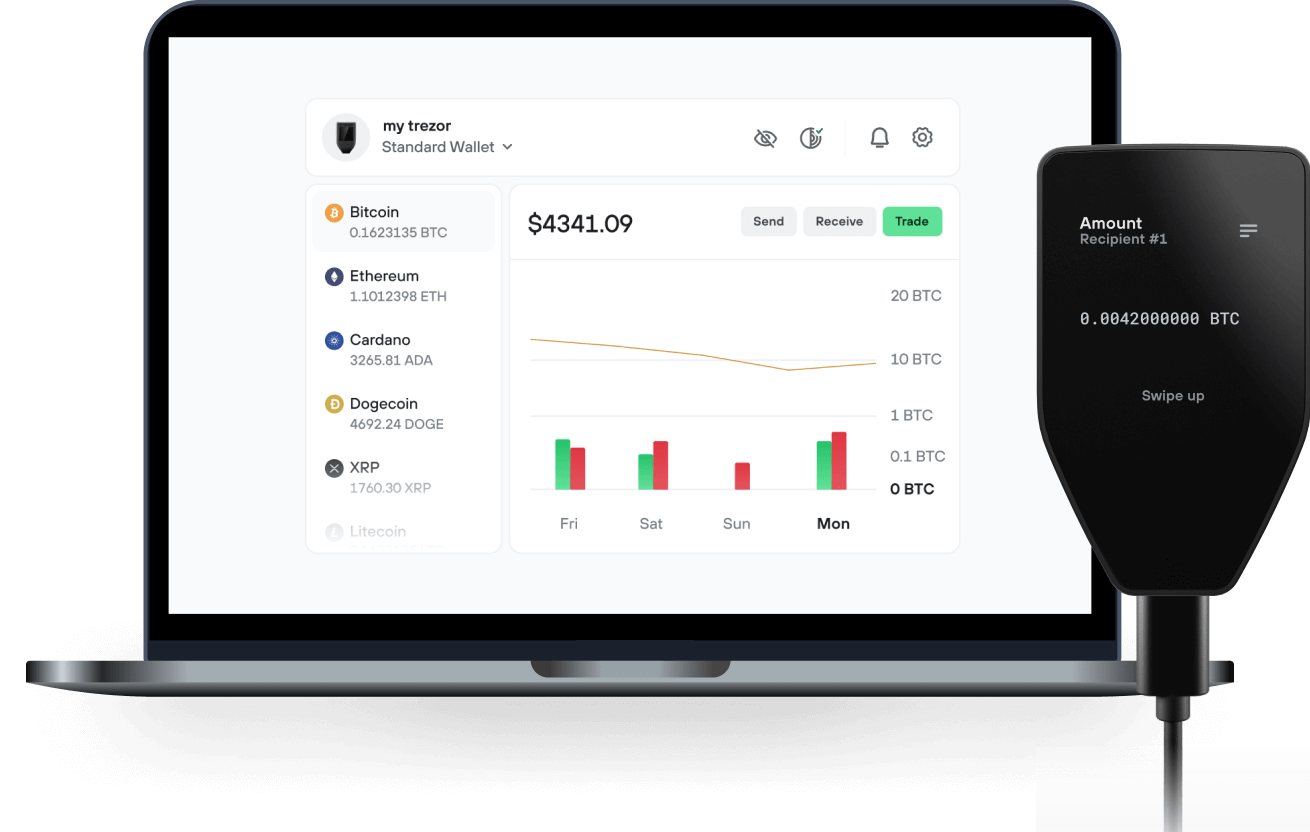
Envie & receba o seu NodeAI com o app Trezor Suite

Enviar & receber
As carteiras de hardware Trezor suportam NodeAI

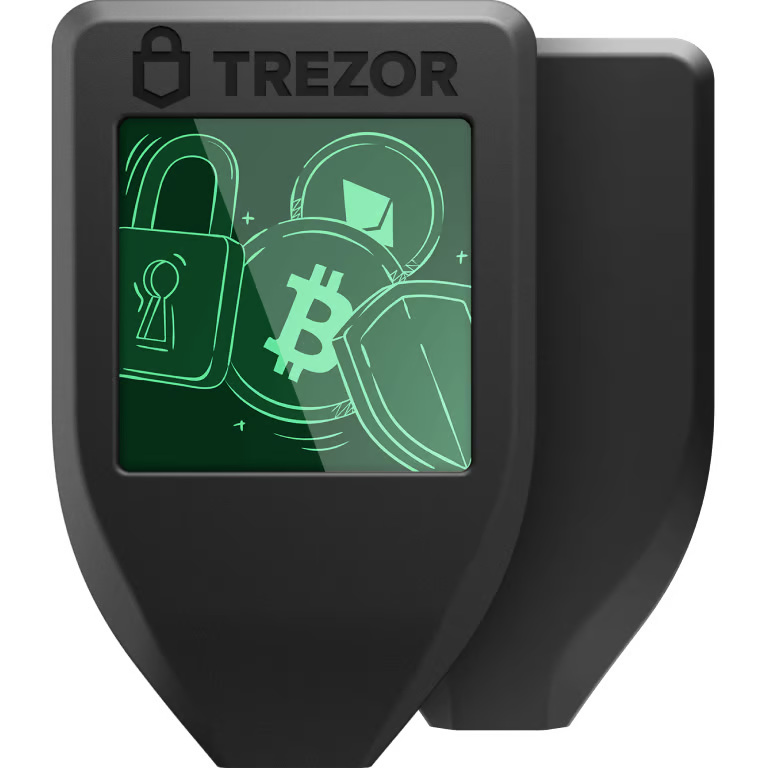
Sincronize sua Trezor com apps de carteira
Gerencie a sua NodeAI com sua carteira física Trezor sincronizada com vários apps de carteira.
Trezor Suite
MetaMask
Rabby
Rede NodeAI Suportada
- BNB Smart Chain
Por que uma carteira de hardware?
Fique offline com a Trezor
- Você controla 100% das suas moedas
- Sua carteira está 100% segura offline
- Seus dados são 100% anônimos
- Suas moedas não estão vinculadas a nenhuma empresa
Corretoras online
- Se uma corretora falir, você perde suas moedas
- Corretoras são alvos de hackers
- Seus dados pessoais podem ter sido expostos
- Você não tem total controle das suas moedas
Como NAIT na Trezor
Conecte seu Trezor
Abra um aplicativo de carteira de terceiros
Gerencie seus ativos
Aproveite o máximo do seu NAIT
Trezor mantém o seu NAIT seguro
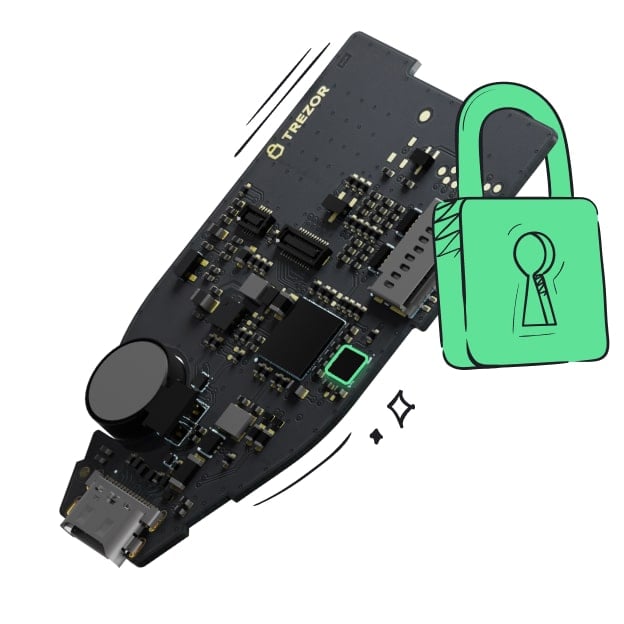 Protegido por Secure Element
A melhor defesa contra ameaças online e offline
 Seus tokens, seu controle
Controle absoluto de cada transação com confirmação no dispositivo
 A segurança começa no código aberto
O design transparente da carteira torna sua Trezor melhor e mais segura
 Backup de carteira claro & simples
Recupere o acesso a seus ativos digitais com um novo padrão de backup
 Confiança desde o primeiro dia
A embalagem & os selos de segurança protegem a integridade da sua Trezor
The production of machine intelligence has come to rely almost entirely on a system of benchmarking, where machine learning models are trained to perform well on narrowly defined supervised problems. While this system works well for pushing the performance on these specific problems, the mechanism is weak in situations where the introduction of markets would enable it to excel. For example, intelligence is increasingly becoming untethered from specific objectives and becoming a commodity that is expensively mined from data, monetarily valuable, transferable, and generally useful. Measuring its production with supervised objectives does not directly reward the commodity itself and causes the field to converge toward narrow specialists. Moreover, these objectives (often measured in uni-dimensional metrics like accuracy) do not have the resolution to reward niche or legacy systems, thus what is not currently state of the art is lost. Ultimately, the proliferation of diverse intelligence systems is limited by the need to train large monolithic models to succeed in a winner-take-all competition. Standalone engineers cannot directly monetize their work and what results is centralization where a small set of large corporations control access to the best artificial intelligence.
A new commodity needs a new type of market. This paper suggests a framework in which machine intelligence is measured by other intelligence systems. Models are ranked for informational production regardless of the subjective task or dataset used to train them. By changing the basis against which machine intelligence is measured, the market can reward intelligence that is applicable to a much larger set of objectives, legacy systems can be monetized for their unique value, and smaller diverse systems can find niches within a much higher resolution reward landscape. The solution is a network of computers that share representations continuously and asynchronously, peer-to-peer (P2P) across the internet. The constructed market uses a digital ledger to record ranks and to provide incentives to peers in a decentralized manner. The chain measures trust, making it difficult for peers to attain rewards without providing value to the majority. Researchers can directly monetize machine intelligence work and consumers can directly purchase it.